By BestHotelPai Team · Updated November 5, 2026
Sai Ngam Hot Spring is north of Pai, not south — about 15 to 17 km up Route 1095 toward Mae Hong Son, roughly 25 to 40 minutes by scooter or songthaew. No hotel sits right next to it, so the practical move is a central Pai town stay like The Arch Casa: make Sai Ngam a half-day trip north, then you're back in time for dinner on Walking Street.
About Sai Ngam Hot Spring — and setting the direction straight
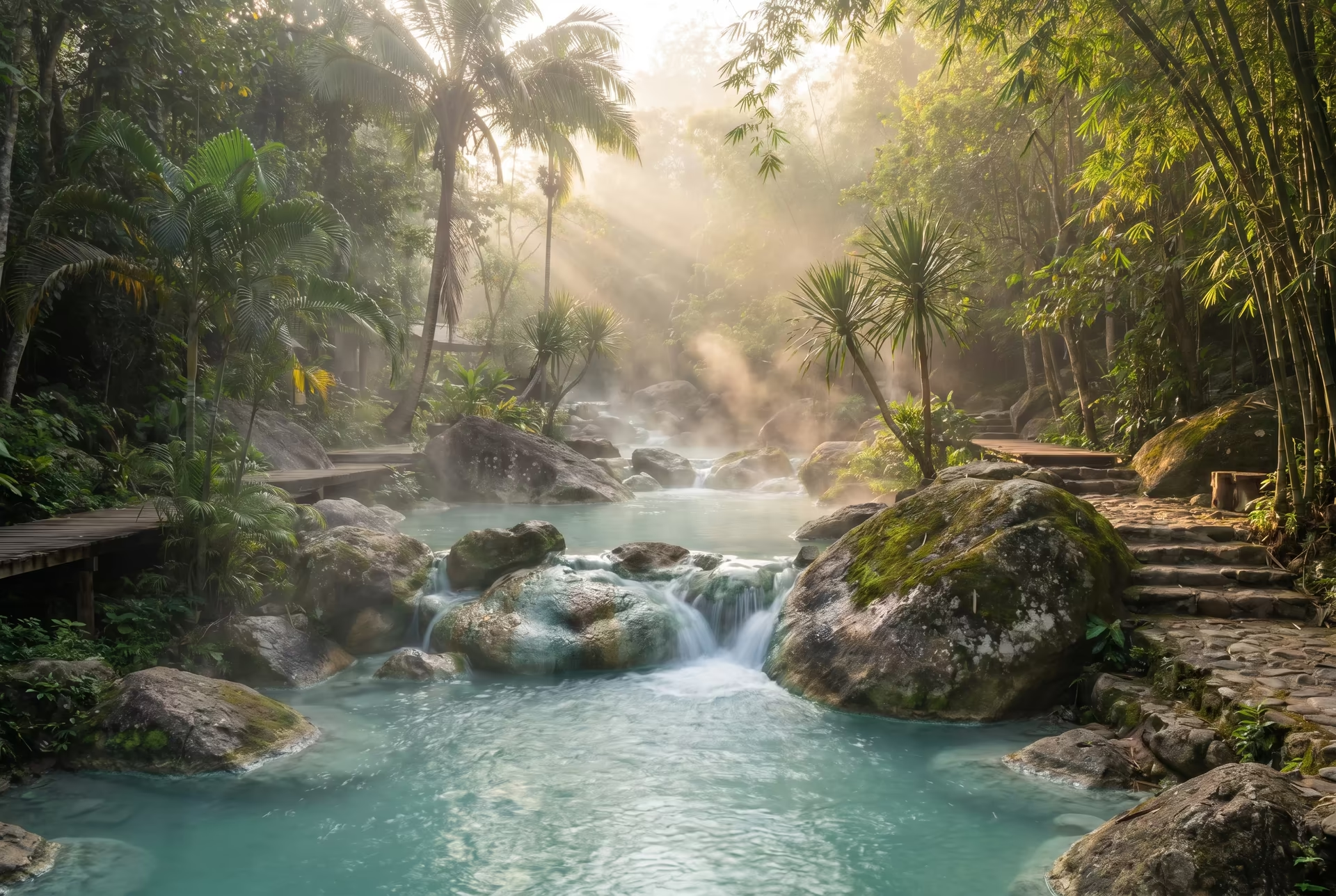
Sai Ngam Hot Spring sits north of Pai, inside the Lum Nam Pai Wildlife Sanctuary in Tambon Mae Na Toeng — roughly 15 to 17 km up Route 1095, the road toward Mae Hong Son. It's a warm, clear natural pool fed by a dammed forest stream, with water reported at around 34–35°C, noticeably quieter and more low-key than the developed Tha Pai Hot Spring south of town.
Earlier versions of this page placed Sai Ngam south of Pai, a few minutes past Tha Pai on the same road. That was wrong — the two springs are on opposite sides of the valley. This page has been corrected (5 Nov 2026) based on several recent visitor write-ups; sources are listed at the bottom.
How to get there: Route 1095, the turnoff, and the climb
From Pai town, head north on Route 1095 toward Mae Hong Son. After roughly 11–12 km, watch for a blue sign marking the turnoff to Sai Ngam. You'll pass a forestry/wildlife-sanctuary checkpoint, where a small fee is typically collected.
The last stretch off the main road is the tricky part: steep, winding, and hilly enough that several riders describe sections as very steep going both up and down. A 125cc or bigger scooter is the sensible minimum — on a smaller bike you may end up walking part of it. If you'd rather skip the driving, a songthaew (shared pickup-truck taxi) from town is a reasonable alternative.
All in, allow about 25 to 40 minutes each way from central Pai, depending on your bike, the road conditions, and how busy the checkpoint is.
What it costs (prices vary by source and by year — bring extra cash)
Fees at Sai Ngam are reported inconsistently across recent write-ups, from a small checkpoint/parking charge of around 20 baht, up to a day-pass commonly cited at roughly 200 baht for adults and 100 baht for children, and a few more recent reports putting adult entry higher still. Treat all of these as approximate — park and sanctuary fees in this area have changed more than once in the last couple of years.
Bring more cash than you expect to need. Cards aren't accepted, and there's often a separate small charge for parking on top of the entry fee.
What it's like, and what to bring
Sai Ngam is a natural, forest-set pool rather than the manicured, terraced setup at Tha Pai — some visitors describe it as tiered or cascading, shaded by trees, with clear water that's warm rather than scalding. It draws fewer tour groups than Tha Pai, especially early in the day, though buses of day-trippers do arrive by mid-morning.
Bring a swimsuit, a towel, cash, a bottle of drinking water, and insect repellent — the forest setting means mosquitoes, especially around dusk. Basic changing rooms and toilets are usually on site, though a few reports describe them as fairly rough.
Best time to go, and scooter safety on the climb
Go early — right at opening (around 8 am) or late afternoon — to get the pool before the mid-morning tour groups arrive. The cool season (November to February) mornings are the most pleasant combination of warm water and cool mountain air.
The road up is genuinely steep in places, with blind corners on the final climb. Keep speeds down, use a scooter with enough power for two riders and the hill (125cc or more is the common recommendation), and don't attempt it after dark.
In the rainy season, the same steep, winding surface can get slick and the forestry checkpoint road rougher. If you're not confident on a scooter in the wet, a songthaew is the safer call.
Sai Ngam vs Tha Pai: opposite directions, not a casual same-afternoon pair
Tha Pai Hot Spring is a different spring entirely, about 8 km south of Pai in the Huai Nam Dang National Park area, with a national-park entry fee (commonly cited around 300 baht for foreign adults). It's the bigger, more developed option — terraced soaking pools, changing rooms, and the boiling source where locals boil eggs in bamboo baskets.
Because Sai Ngam is north and Tha Pai is south, they aren't the easy same-afternoon pairing some older guides suggest — you'd be crossing back through town between two separate half-day trips in opposite directions. Doable if you're keen on both, but plan it as two outings, not one loop.
Where to actually stay — a central Pai base, not a spring-side hotel
To be clear: none of the stays on this site sit near Sai Ngam Hot Spring. All six are in or around Pai town itself, and Sai Ngam is a half-day trip north from any of them — about 25 to 40 minutes by scooter, whichever one you pick.
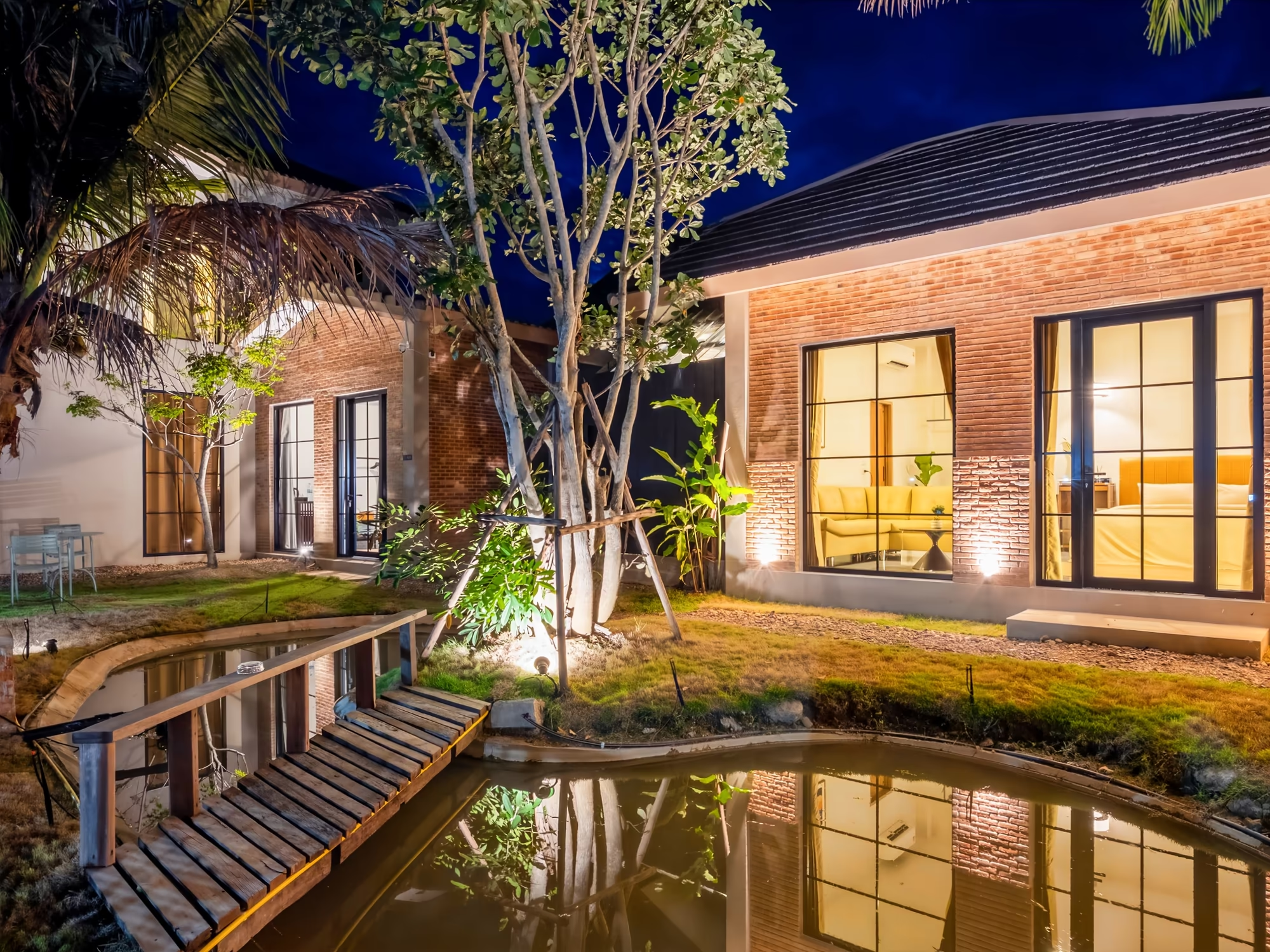
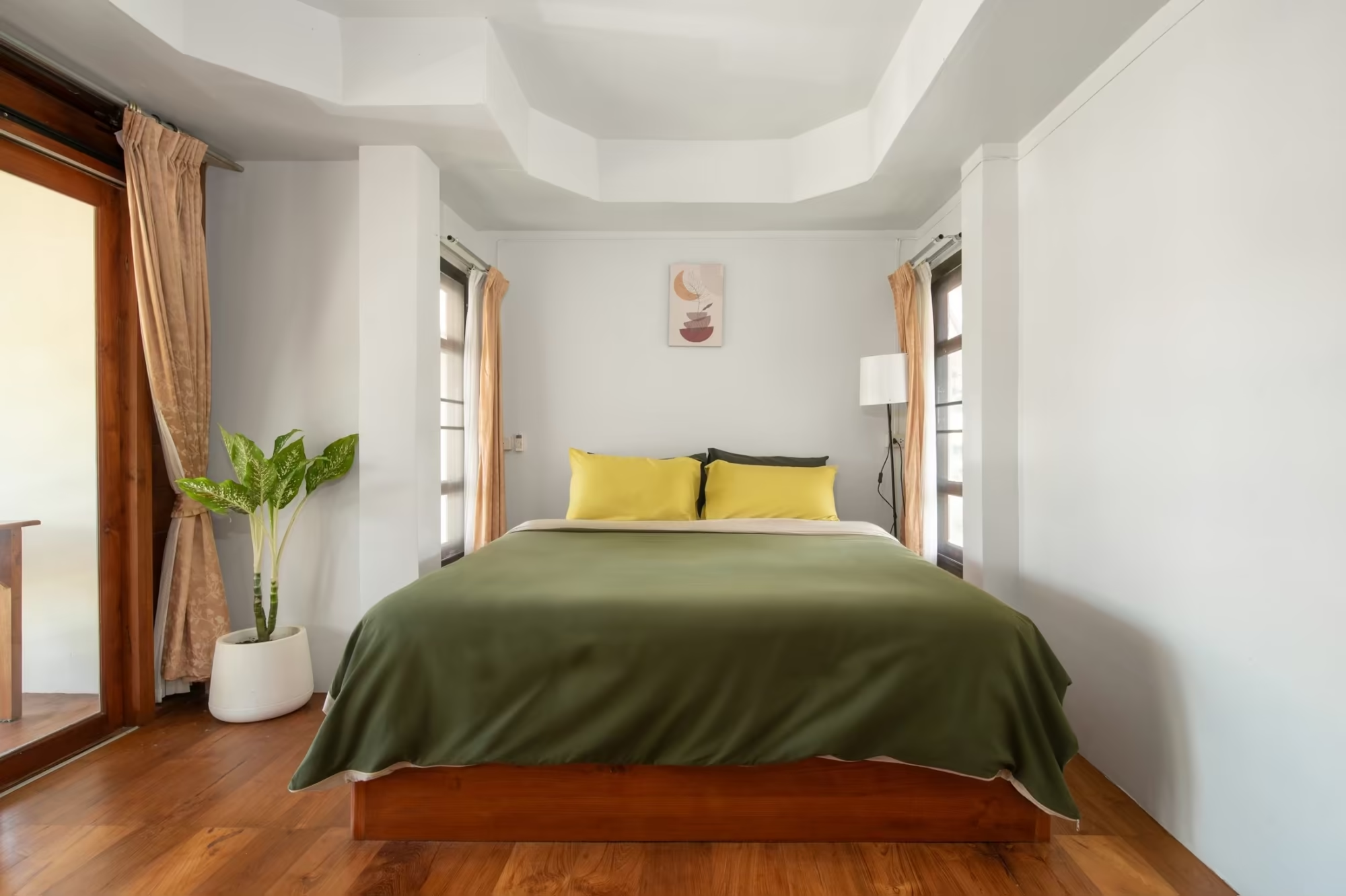
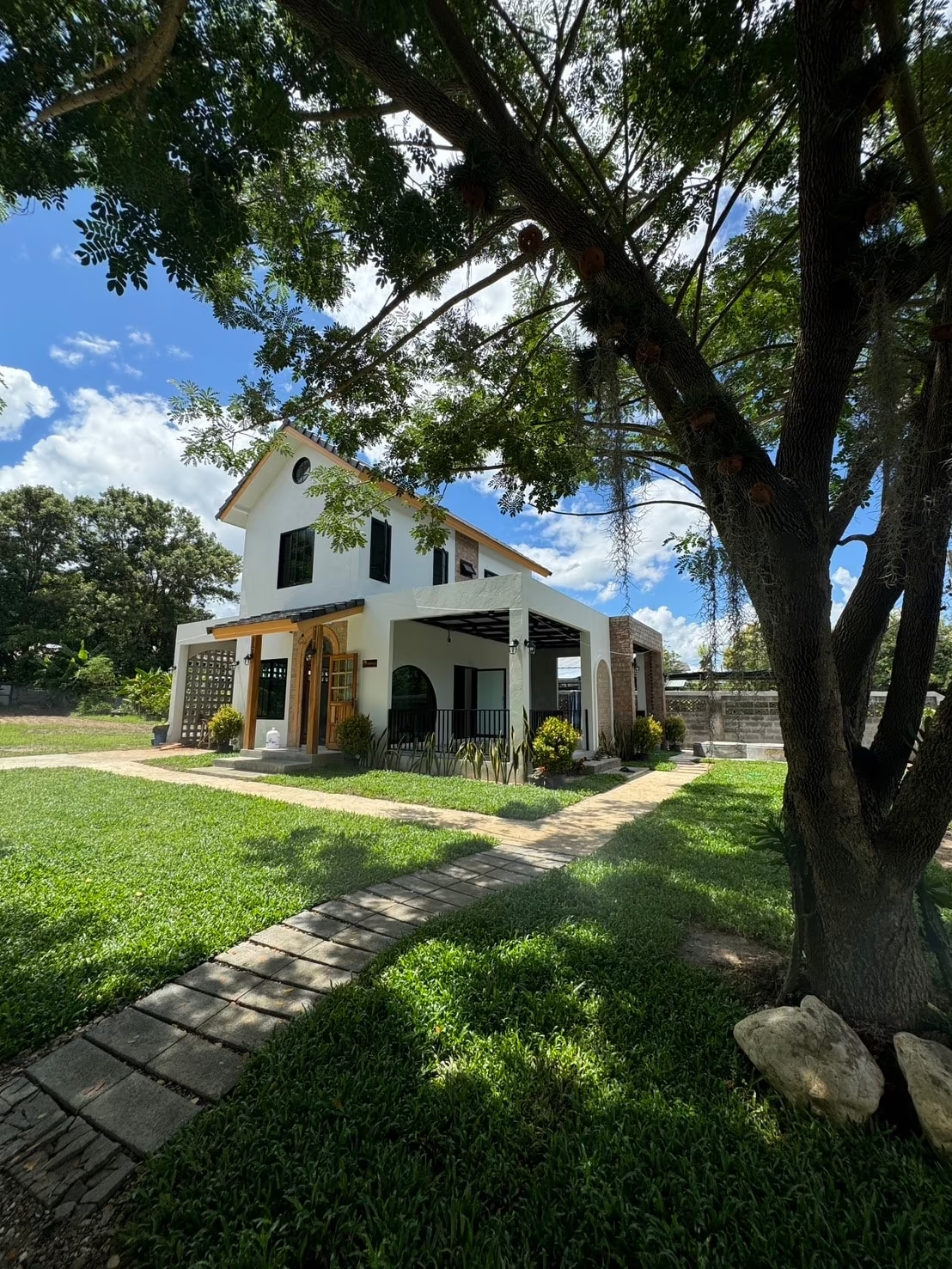
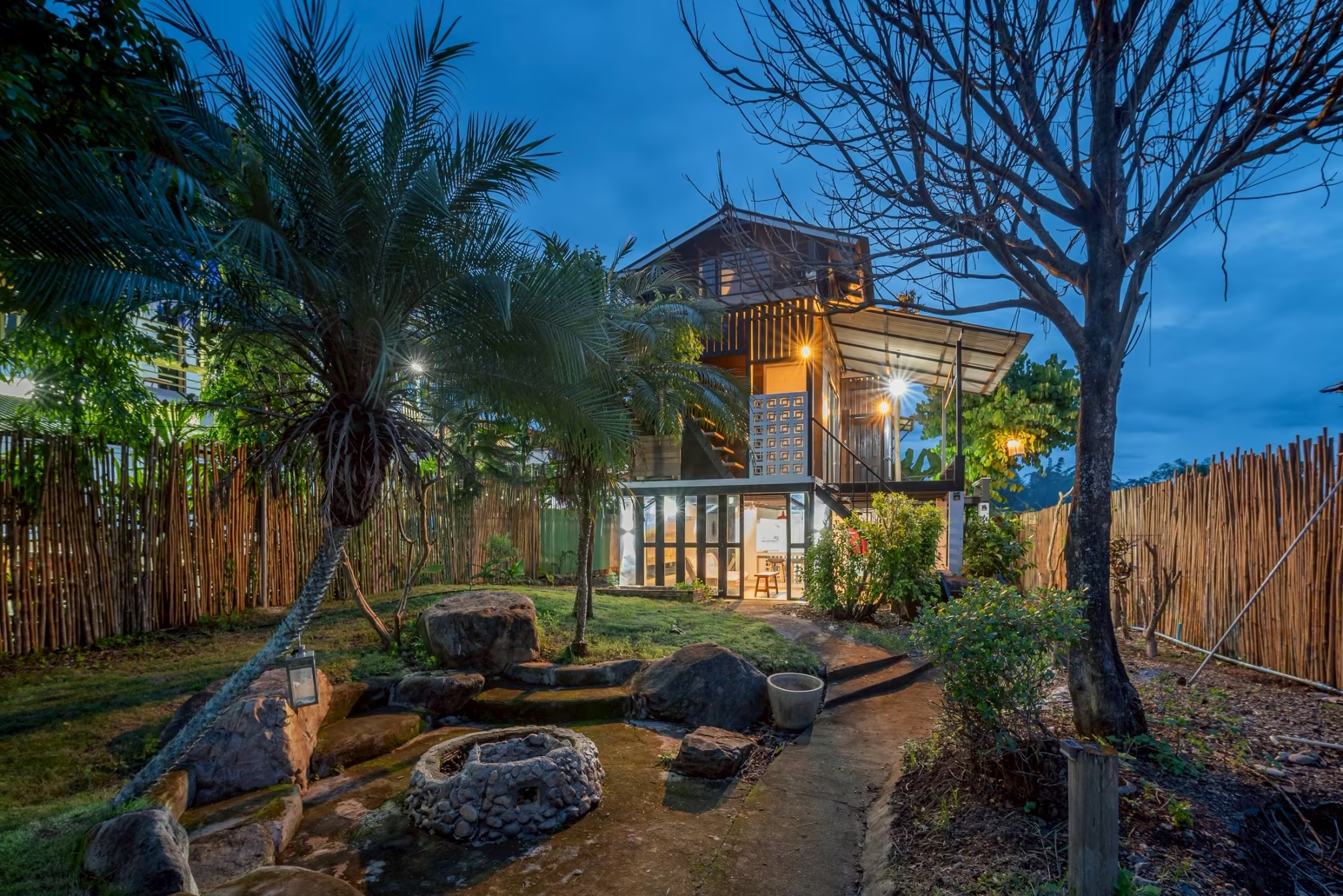
Given that, the practical move is to stay central and treat Sai Ngam as a trip out and back, not a base to build your stay around. The Arch Casa sits in the heart of Pai, a few minutes' walk from Walking Street — ride out to Sai Ngam for the morning or late afternoon, then you're back for dinner and the night market with no extra riding. Betel Palm Village and Eden Villa are similarly close to town and work just as well as a base for the same day trip.
The rice-field stays on this site, Paddy Fields Haven and Camp View Mountain, sit outside the town centre itself, so factor in a longer ride into town on top of the trip up to the spring. For Sai Ngam specifically, staying central is simply the easier option.