By BestHotelPai Team · Updated June 29, 2026
Pai Canyon (Kong Lan) is a free-to-enter network of narrow red-clay ridges about 8 km from Pai town, best visited at sunset. There's no fee and no set trail — you walk the spines yourself, so wear grippy shoes and bring water. Arrive 45 minutes before sunset for the best light and a parking spot.
What is Pai Canyon?
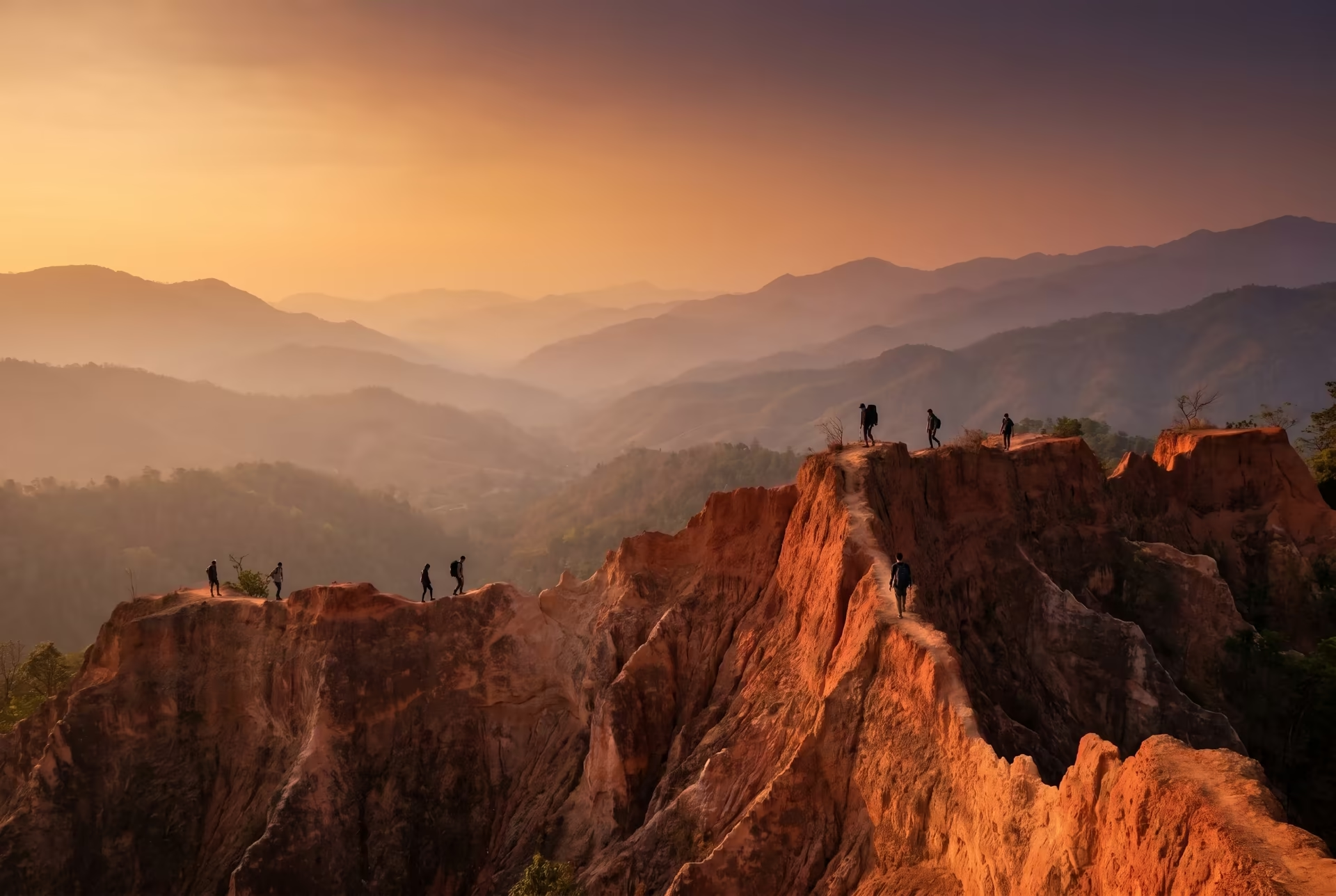
Pai Canyon — known locally as Kong Lan — is a network of narrow, finger-like ridges carved out of red clay and sandstone by thousands of years of rain and wind. The ridges rise steeply from the valley floor, and you can walk along their spines, balancing above the trees with panoramic views over the mountains surrounding Pai.
It's the most photographed sunset spot in the Pai valley, and once you're up there it's easy to see why. The west-facing ridges light up gold and orange as the sun drops, and layer after layer of blue mountains fade into the haze behind them.
Unlike a fenced viewpoint, Pai Canyon has no railings and no set path. You climb and explore at your own pace, which is part of the adventure — and the reason a little care goes a long way.
When to go: sunset, sunrise and the seasons
Sunset is the headline act. The canyon faces west, so the ridges glow orange and the layered mountains behind fade into haze — it's the photo everyone comes for. Sunset falls between roughly 5:45 pm in the depth of the cool season and 6:45 pm in the hot season; arrive about 45 minutes early to claim a spot on the main ridge.
Sunrise is the quiet alternative. Almost no one goes, the light is soft and pink, and you'll have the ridges to yourself. If you're a photographer or just hate crowds, sunrise is the better choice.
The best months are November to February — clear skies, cool air, and the crispest sunset colours. Avoid the rainy season (June to September) for the canyon itself: the clay becomes slippery and visibility often disappears into cloud. March and April can be hazy from burning, so views are softer.
How to get there
Pai Canyon is about 8 km south of Pai town on Route 1095, the main road towards Chiang Mai — roughly 15 minutes by scooter or car. There's a free car park at the entrance and a short concrete staircase up to the main viewpoint.
A scooter is the most popular way to reach the canyon; the road is paved and easy. If you'd rather not ride, a red songthaew taxi or a private car can take you and wait, or you can combine the canyon with the hot springs and Yun Lai viewpoint on the same half-day loop.
Ask us on WhatsApp and we'll point you to the quickest route from your room, or arrange a driver if you'd prefer not to ride.
The trails and how hard they are
There's no single marked trail. From the top of the entrance staircase you step onto the main ridge and simply walk along it, choosing how far to go. Some sections are wide enough for two; others narrow to a spine barely a foot across, with steep drops on both sides.
It's not technical climbing — it's walking and balancing. Anyone with reasonable mobility can enjoy the first stretch near the entrance, which has the broadest ridge and the classic sunset view. The narrower spines further along are for the confident; there's no shame in turning back when it feels too exposed.
Allow 30–60 minutes to explore properly. There are no railings anywhere, so the rule is simple: if a section looks crumbly or too narrow, don't push on. The clay edges erode constantly, and what held weight yesterday may not today.
Tips for a good visit
Wear shoes with grip — flip-flops are a bad idea on the clay, especially coming back down after sunset when it's dim. Trainers or hiking sandals are ideal. Bring water, and a small torch or phone light for the walk down after the sun sets.
On weekends and in peak season the main viewpoint gets busy and parking fills up — go 10 minutes earlier than you think you need to. The further you walk along the ridges, the fewer people you'll share the view with.
Bring a light layer for after sunset: the canyon is exposed and the temperature drops quickly once the sun goes, even in the hot season.
Photography tips
For the classic shot, position yourself on a ridge that juts out so the layers of mountains fill the frame behind you — the further spine, about 10 minutes' walk in, gives the best depth.
Golden hour here is short and spectacular. Shoot the ridges silhouetted against the sky first, then turn around for the warm light on the rock faces as the sun drops. A phone is perfectly fine; there's no need for a big camera unless you want long exposures after dark.
If you want people-free photos, go at sunrise. At sunset you'll be sharing every ridge with other travellers — embrace it, or walk further along to find a quieter spine.
Combine it with a half-day loop
Pai Canyon sits on the same side of town as several other highlights, which makes it perfect for a half-day circuit. A popular loop takes in Yun Lai viewpoint for an afternoon panorama, the hot springs for a soak, and finishes at the canyon for sunset.
The Bamboo Bridge (Sutongpe) and Mo Paeng waterfall are also on this side of the valley if you want to extend the loop. It's an easy, rewarding day that shows off the best of the countryside around Pai without much driving.
Staying on the south side of town puts you closest to all of these — see our recommendations below for places a short ride from the canyon.