By BestHotelPai Team · Updated June 29, 2026
Pai has two main hot springs. Tha Pai Hot Spring is the developed one inside a national park — a small entry fee, hot mineral pools you can soak in, and a boiling source where locals boil eggs in bamboo baskets. Sai Ngam is the quieter natural spring in the forest, cheaper and more laid-back. Both are 7–10 km south of town on the same road. Bring a swimsuit, towel and cash; go early morning or near sunset to avoid crowds.
Tha Pai vs Sai Ngam — which should you pick?
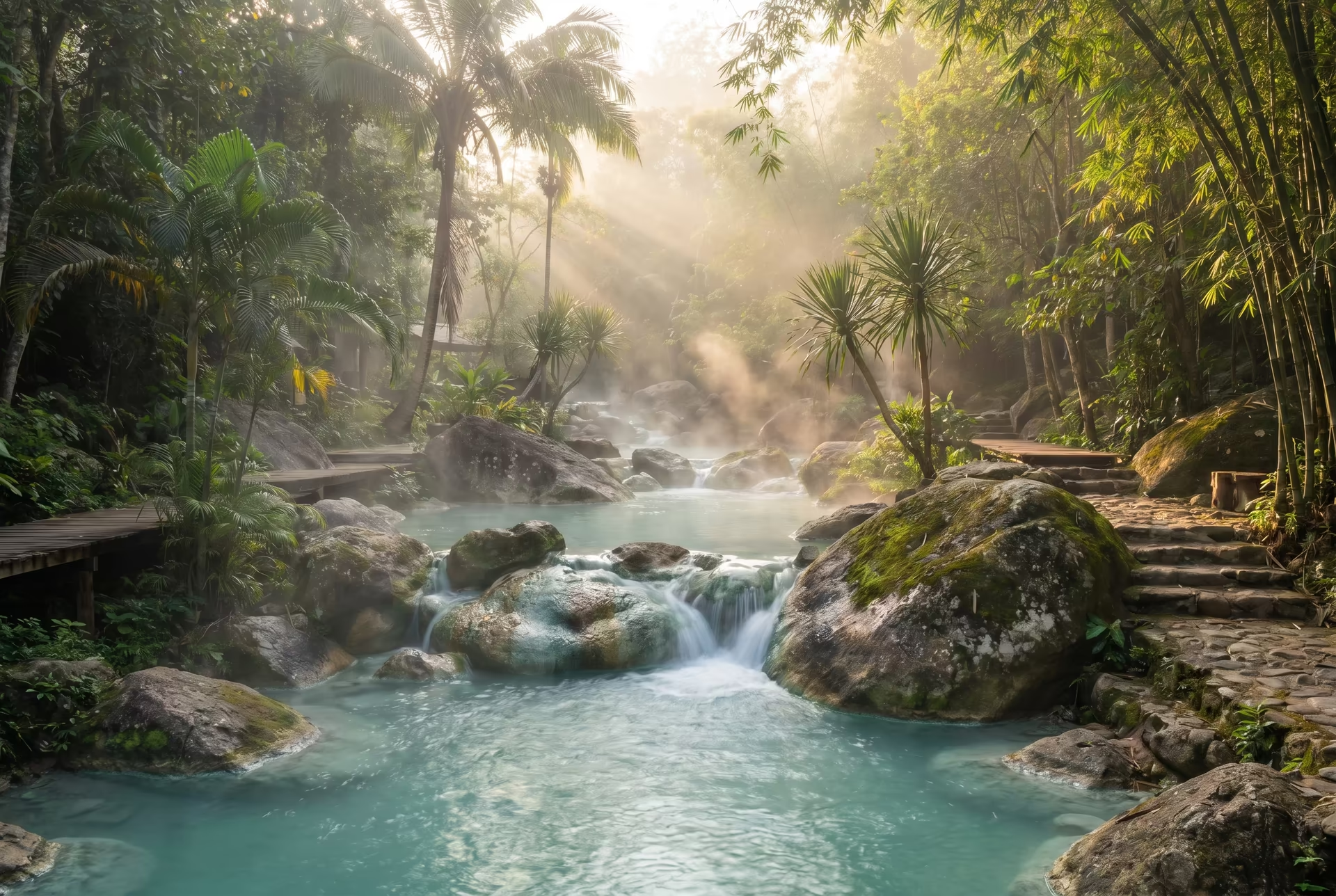
Tha Pai Hot Spring (also written Tha Pai or Ta Pai) is the popular, developed option. It sits inside a national park, so there's a proper entrance, changing rooms, and several terraced mineral pools where the hot spring water is cooled to a comfortable soaking temperature. At the very top you can see the boiling source — locals rent bamboo baskets and boil quail eggs right in the steaming water. It's busy, family-friendly, and the easiest first visit.
Sai Ngam Hot Spring is the quieter, more natural alternative, set deeper in the forest a few minutes further down the same road. There are fewer facilities, smaller pools, and a much calmer atmosphere — it's the one locals go to when they want peace rather than a crowd. The water is warm rather than hot, and you're surrounded by trees instead of concrete.
If you only have time for one: Tha Pai for the full hot-spring experience and the egg-boating novelty; Sai Ngam for a quiet soak in nature. They're close enough that many people visit both in the same afternoon.
Prices, opening hours and facilities
Tha Pai Hot Spring charges a national-park entry fee — around 300 baht for foreign adults and 100 baht for children, with a lower Thai rate. Sai Ngam is cheaper, often a small fee or donation. Prices change, so bring a bit more cash than you think you'll need.
Opening hours are roughly 8 am to 6 pm for Tha Pai. Some pools and small private soak tubs can be rented by the hour if you want a quieter experience. Sai Ngam is more informal and best visited during daylight.
Tha Pai has changing rooms, toilets, and a few food and drink stalls near the car park. Sai Ngam has only basic facilities — come prepared.
How to get there
Both springs sit on the same road heading south out of Pai towards Sutongpe Bridge and Mae Hong Son — Route 1095, then a side road to the springs. It's about 7–10 km from Pai town, or 15–25 minutes by scooter. The turn-off is signposted in English.
A scooter is the easiest way — the road is paved and mostly flat. If you don't ride, a red songthaew taxi or a Grab can take you there and back for a fixed price; agree the return trip before you set off, as there's no regular transport waiting at the springs.
Many of our guests combine the hot springs with nearby stops on the same loop — Pai Canyon, the Bamboo Bridge, and Yun Lai viewpoint are all on the same side of town and make a perfect half-day circuit. Ask us on WhatsApp and we'll map the route from your room.
Best time to visit
The cool season (November to February) is the ideal time — crisp mountain air makes the warm mineral water feel wonderful, especially in the early morning or near sunset. This is also peak season, so expect more people; go before 10 am or after 4 pm for a quieter soak.
In the hot season (March to May) a hot soak midday is too much — visit early morning when the air is still cool. In the rainy season (June to October) the springs are open and very quiet, though the road can be wet; the rain actually makes the warm water more appealing.
Avoid midday in high season if you can — that's when tour groups and day-trippers from Chiang Mai arrive. Early morning soaks are magical: mist over the forest, no crowds, and the water feels best.
What to bring
A swimsuit, a towel, and cash for entry are the essentials. Add a change of clothes in a dry bag, sunscreen, and insect repellent — the forest around Sai Ngam has mosquitoes at dusk.
A bottle of cold water is a good idea; soaking in hot water dehydrates you faster than you'd expect. If you want to try egg-boiling at Tha Pai, there are usually vendors selling eggs and bamboo baskets at the entrance, so you don't need to bring your own.
Wear easy-to-remove footwear — flip-flops or sandals — and bring a small amount of soap if you're particular, since the facilities at Tha Pai are basic.
Tips for a good soak
Stay hydrated and limit soaks to 15–20 minutes at a time, especially in the hotter upper pools. If you feel light-headed, get out and cool down. Don't soak too long in peak heat.
At Tha Pai, work your way up from the cooler lower pools to the hotter upper ones — your body adjusts gradually and the experience is more comfortable. The source itself is far too hot to touch; stick to the managed pools.
Be respectful: these are natural sites used by locals too. Don't use soap or shampoo in the pools, keep noise down at Sai Ngam, and take your rubbish with you.