By BestHotelPai Team · Updated August 13, 2026
In short Getting around Pai is easiest on two wheels: a scooter rents for roughly 100 to 200 baht a day and reaches every waterfall and viewpoint. Walking covers the town centre and night market, while songthaews, bicycles and motorbike taxis fill the gaps. Pick the option that matches your comfort with mountain roads, not the cheapest sticker price.
You have landed in Pai after the long, winding road from Chiang Mai, and now a quieter question lands too: how do you actually move around once you are here? The town itself is tiny and walkable, but the waterfalls, viewpoints and hot springs that pulled you up the mountain are spread across the valley. We run six small stays here, and the question we hear most after check-in is not "what should I see" but "how do I get there without getting stuck."
So here is the honest local picture of getting around Pai, from people who do these short hops every single day. No agency upsell, no scary warnings, just what works for the kind of trip you are planning.
Why does getting around Pai feel trickier than it looks?
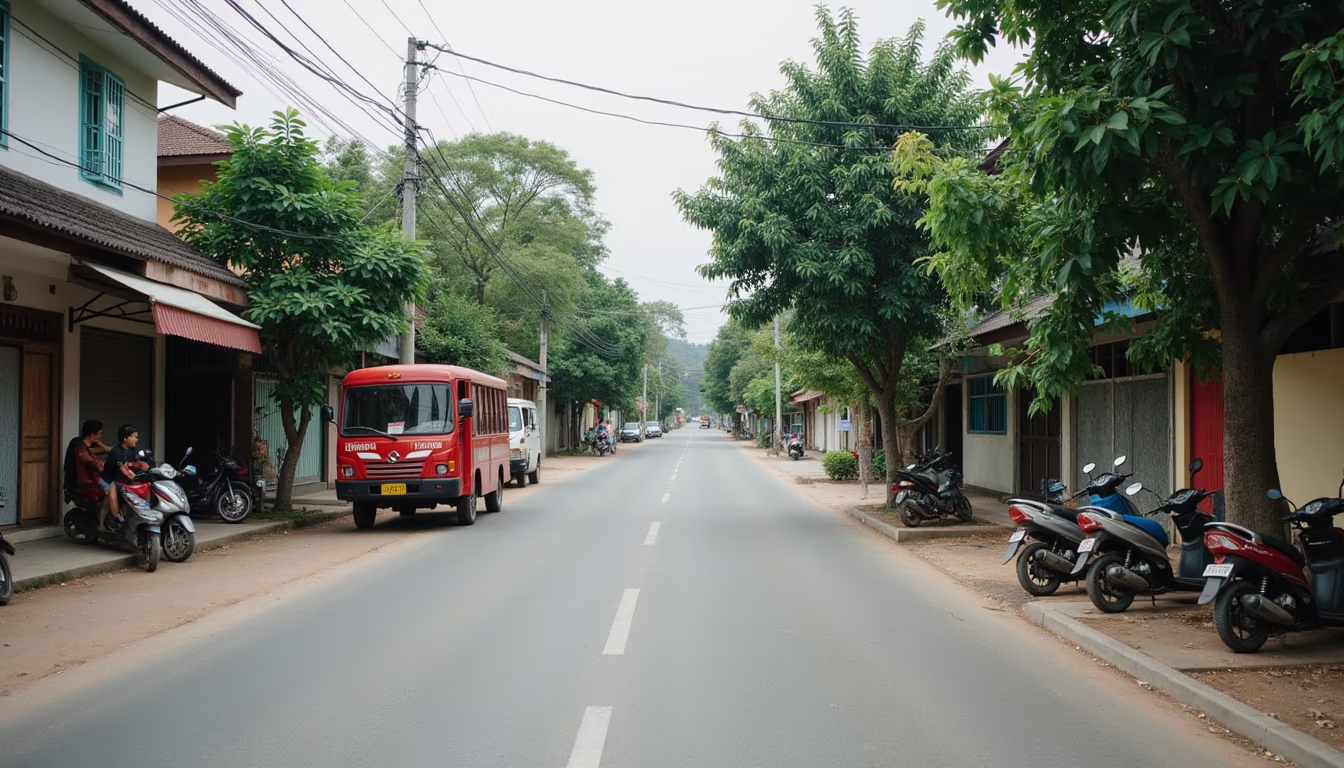
Pai sits in a small valley in Mae Hong Son province, ringed by hills, with the Pai River curling through it. The walkable heart, where the Walking Street night market sets up each evening, is only a few hundred metres across. Everything postcard-worthy, though, is 5 to 30 minutes out: Pai Canyon to the south, the hot springs and Land Split to the southeast, Mo Paeng and Pam Bok waterfalls to the west, Yun Lai viewpoint and the Chinese village to the north.
That layout is the whole reason transport matters here. The town gives you a false sense that everything is close, then the map reminds you the sights fan out across the valley. According to the official provincial tourism information from the Tourism Authority of Thailand, Pai's attractions are scattered through the surrounding district rather than clustered in one strip, which is exactly why most visitors end up renting their own wheels.
From what we see with guests, the people who enjoy Pai most are the ones who sort transport on day one instead of improvising every morning. The valley rewards a slow, self-paced rhythm, and that is hard to get if you are waiting on someone else's schedule.
Compare your options for getting around Pai Thailand
There is no single right answer, only the right fit for your group and your nerve on a curvy road. Here is how the main ways of getting around Pai Thailand stack up, with the rough daily costs we quote to our own guests.
| Option | Rough daily cost | Best for | Watch out for |
|---|---|---|---|
| Scooter rental | 100 to 200 baht | Reaching every waterfall and viewpoint freely | Steep curves, gravel near falls, need a licence |
| Bicycle | 50 to 80 baht | Flat rides near town and rice fields | Hills out of town are tough in the heat |
| Songthaew (shared truck) | 50 to 150 baht per trip | Non-riders heading to one or two big sights | Limited timetable, may wait to fill up |
| Motorbike taxi | 40 to 100 baht per ride | Quick hops within town after dark | Not practical for a full day of touring |
| Walking | Free | Town centre, cafes, night market | Will not reach the waterfalls or canyon |
Most visitors mix two of these: a scooter for the day trips and their own two feet for the evening market. If your stay is close to the centre, like several of the places in our guide to the best Pai neighbourhoods, you can walk to dinner and only fire up the scooter for the scenic runs.
Should you rent a scooter? Who it suits, who it does not
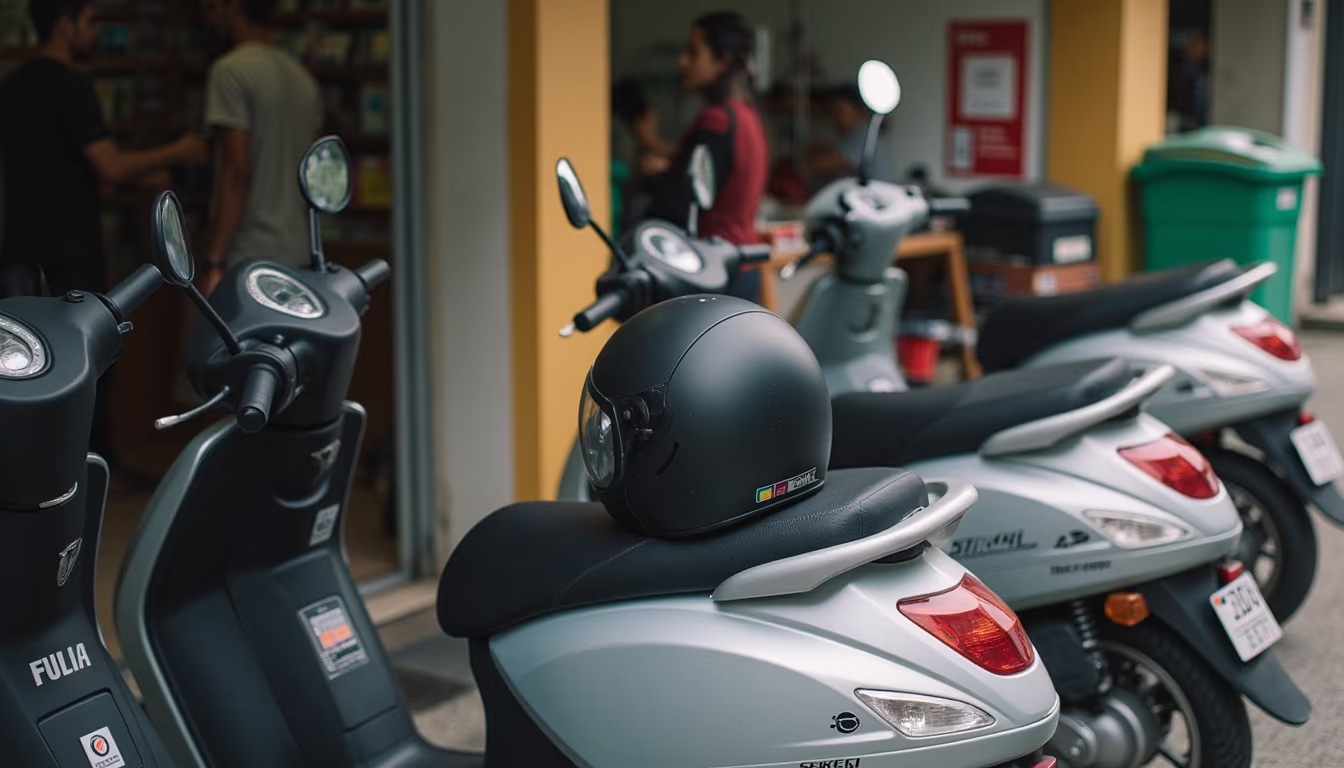
The scooter is the default for a reason: it turns a sprawling valley into a 30-minute playground. A few honest pointers from doing this daily:
- Bring the right licence. Police checkpoints sit on the main roads, and an International Driving Permit covering motorcycles keeps things smooth. Riding without one can void your travel insurance.
- Photograph the bike before you ride. Snap any existing scratches so there is no dispute on return. Reputable shops expect this.
- Helmet on, always. It is the law and the road has loose gravel near the falls.
- Refuel before you leave town. Outlying spots have only roadside bottle fuel at a markup.
So who is the scooter right for? Confident riders, couples splitting one bike, and anyone who wants to chase a sunrise viewpoint on their own clock. Who should skip it? Total beginners, families with small kids, and travellers visiting in the wet season when the downhills turn slick. If you have never ridden, Pai's hills are not the gentlest place to learn. In practice, nervous first-timers are happier pairing songthaews with a half-day driver than wrestling a clutch on a wet downhill. There is no shame in it, and it keeps your trip relaxed.
Plan your day-trip loops (and the road into Pai)

Once you can move, the valley opens up. A loop south covers Pai Canyon at sunset and the hot springs; a loop north reaches Yun Lai viewpoint for sunrise and the Chinese village for lunch. Most sights sit inside protected land managed by Thailand's national parks system, so a small entry fee is normal and worth keeping coins for. The Department of National Parks oversees these reserves, and fees go toward maintaining the trails you will walk.
Getting to Pai before any of this happens is its own adventure: the 762-curve road from Chiang Mai takes about 3 hours by minivan and is famously winding. We walk arriving guests through the journey in our arrival and transport guide, including motion-sickness tips and the best departure times.
Please treat distances and fees here as a guide and confirm the latest road conditions, park hours and rental terms locally, since they shift with the season and the weather in the hills.
Why a central BestHotelPai stay makes moving around effortless
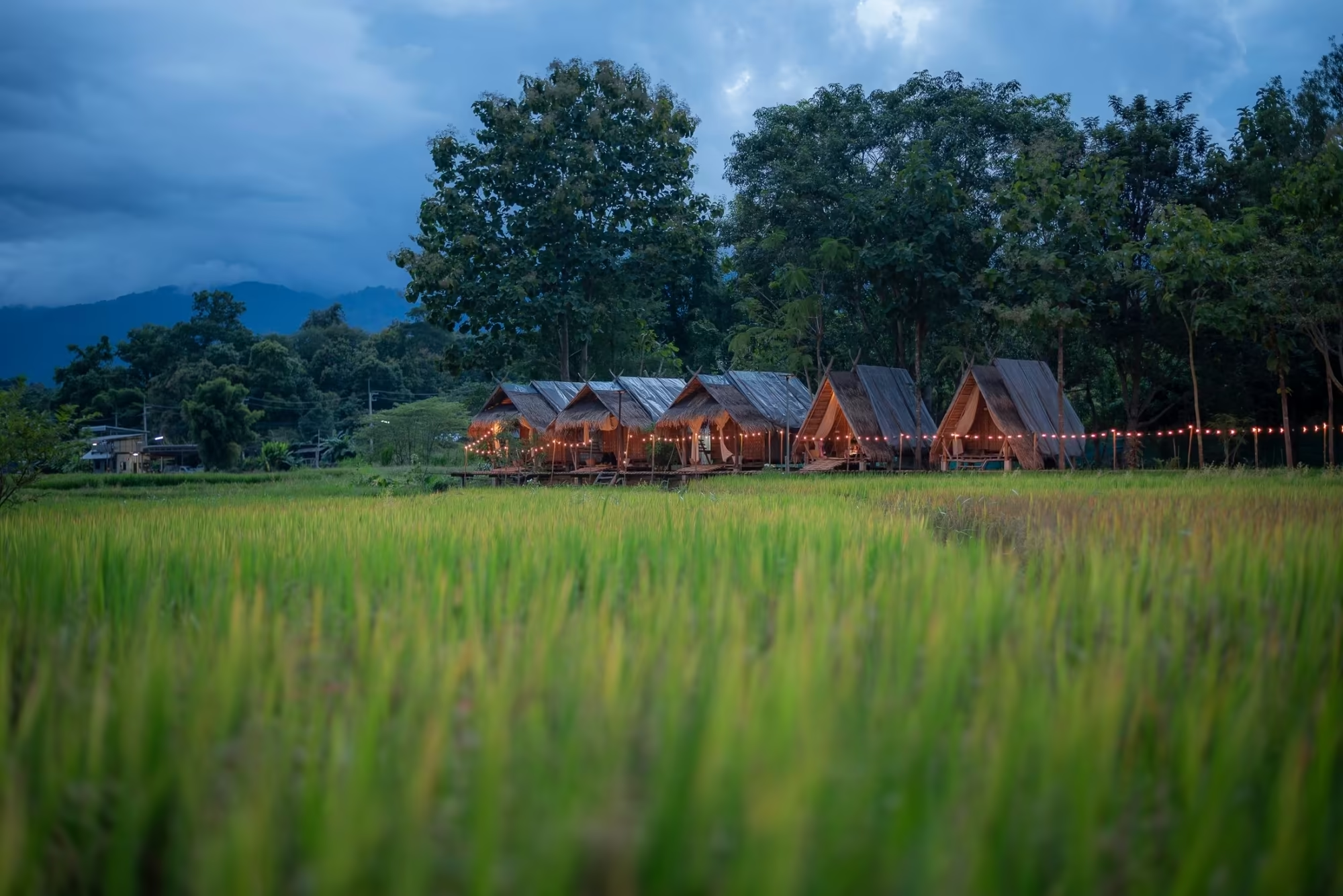
Transport gets dramatically simpler when your stay is in the right spot. A place a short walk from the Walking Street means you only need wheels for day trips, not for dinner. A quieter rice-field stay trades that walkability for calm, so you will lean on a scooter more. Neither is wrong; it just changes your rhythm.
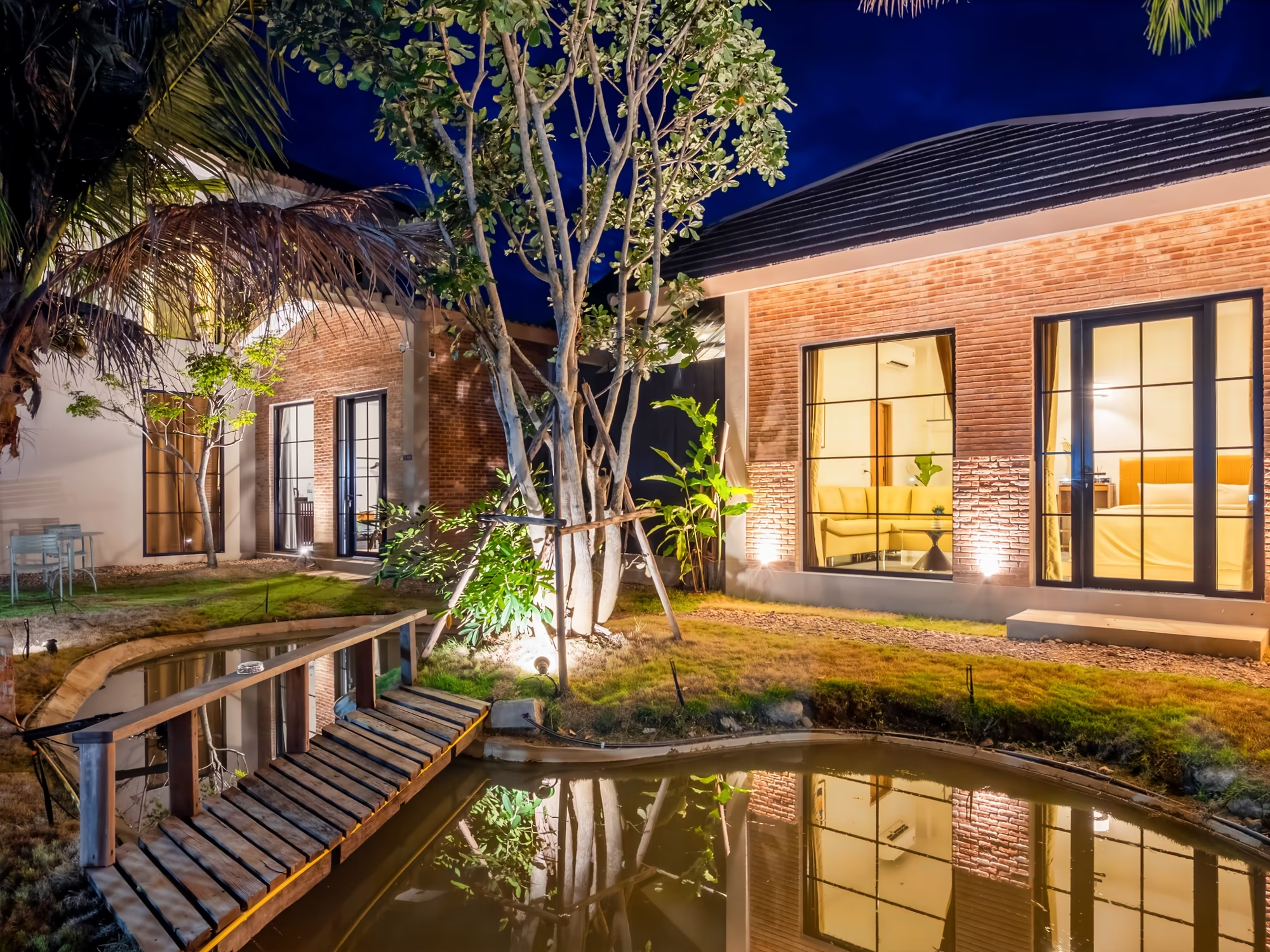
We help guests match the stay to how they want to move. Couples who plan to scooter everywhere and want a calm base often love the design rooms at The Arch Casa, while travellers who would rather walk to the market pick something nearer the centre. When you book direct with us, we sketch a simple route plan for your dates so you are not guessing on arrival.
Booking straight through real owners also means you pay up to 10% less than the booking sites, with free cancellation and no deposit just to ask a question.
Getting around Pai is not complicated once someone honest lays out the choices. Match the transport to your comfort and your base, sort it on day one, and the valley becomes the slow, dreamy place everyone promised you. When you are ready, we are right here to help.