By BestHotelPai Team · Updated July 8, 2026
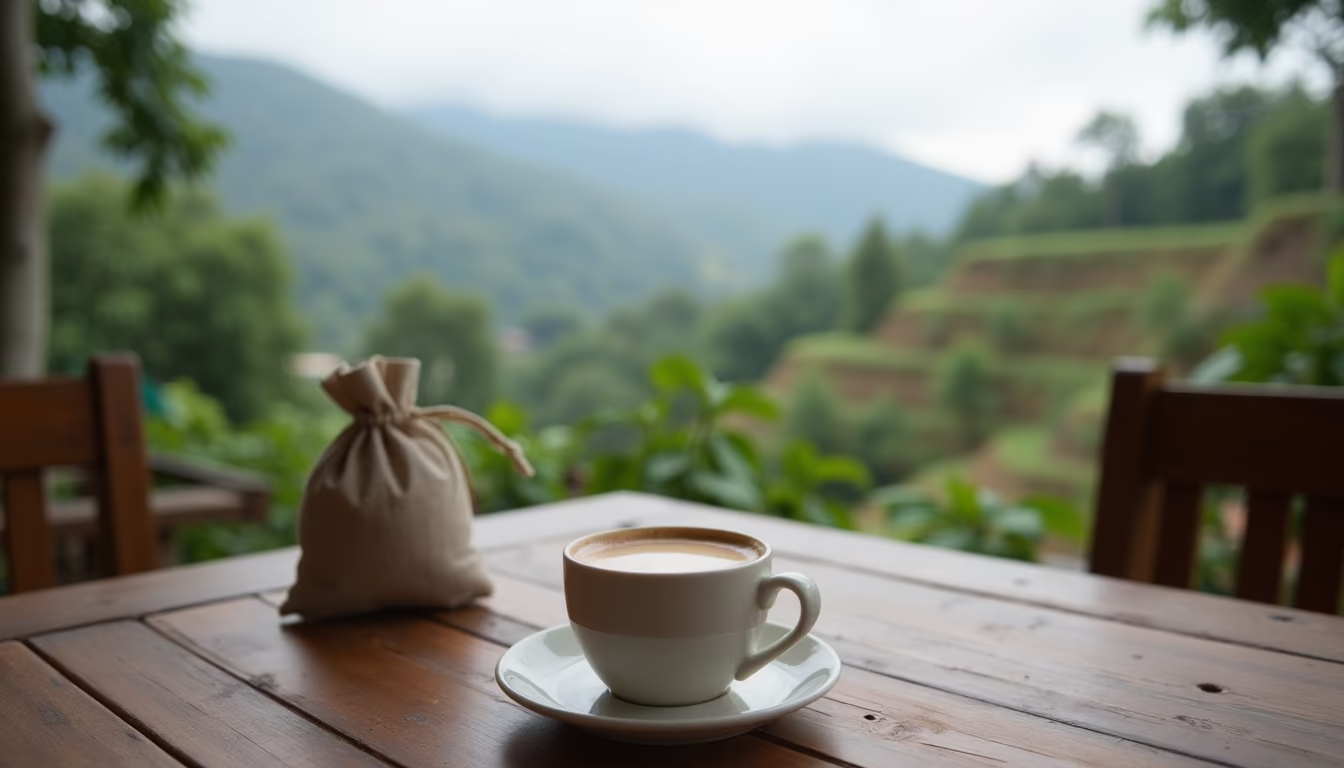
In short Pai coffee is better than its laid-back reputation suggests, because the valley sits near highland villages that grow arabica, so single-origin local beans are easy to find. Expect scenic rice-field and hillside cafes, solid flat whites, and roasters who will sell you beans to take home. Mornings are calm and couples-friendly, and most good spots are a short scooter ride from town.
"We came for waterfalls and ended up planning the whole day around where to drink the next cup." A guest said that to us last cool season, half-joking, over a flat white at a rice-field table. She was not wrong. Pai coffee has quietly become one of the best reasons to slow down here, because the valley sits next to highland villages that actually grow the beans you are sipping.
So is the coffee here just pretty cafes with a view, or is there real substance in the cup? We think there is genuine craft behind it, and the views are a bonus rather than the whole story. Below we explain why local single-origin beans are a thing, where the scenic mornings are, how the flat-white quality holds up, where to buy beans to take home, and how to base yourself for a slow couples-friendly start to the day.
Why pai coffee is a real thing, not just a backdrop
Real farms behind the cup
People assume Pai coffee is all aesthetic, a swing seat over a paddy and a photo. That sells it short. The hills around the wider Mae Hong Son area sit at the kind of altitude where arabica grows well, and several nearby villages have shifted from older crops toward small coffee plots over the past couple of decades. That means a lot of what you drink here is grown close by, not trucked in.
How cafes talk about their beans
What surprises first-timers is how much the cafes lean into that. You will see bags labelled by village and by process, washed or natural or honey, and baristas who can tell you the rough altitude the cherries came from. From what we see with guests, the people who treat Pai as a coffee region, and not just a backpacker stop, end up with the most memorable mornings.
Why the highland climate matters
According to the Tourism Authority of Thailand, Mae Hong Son province is known for its cool highland valleys and hill-tribe farming communities rather than big industry, which is exactly the geography that lets arabica thrive up here. That cool-season climate, roughly November to February, is also when the cups taste their brightest and the terraces look their greenest.
Single-origin local beans and what to look for
What "single-origin" means here
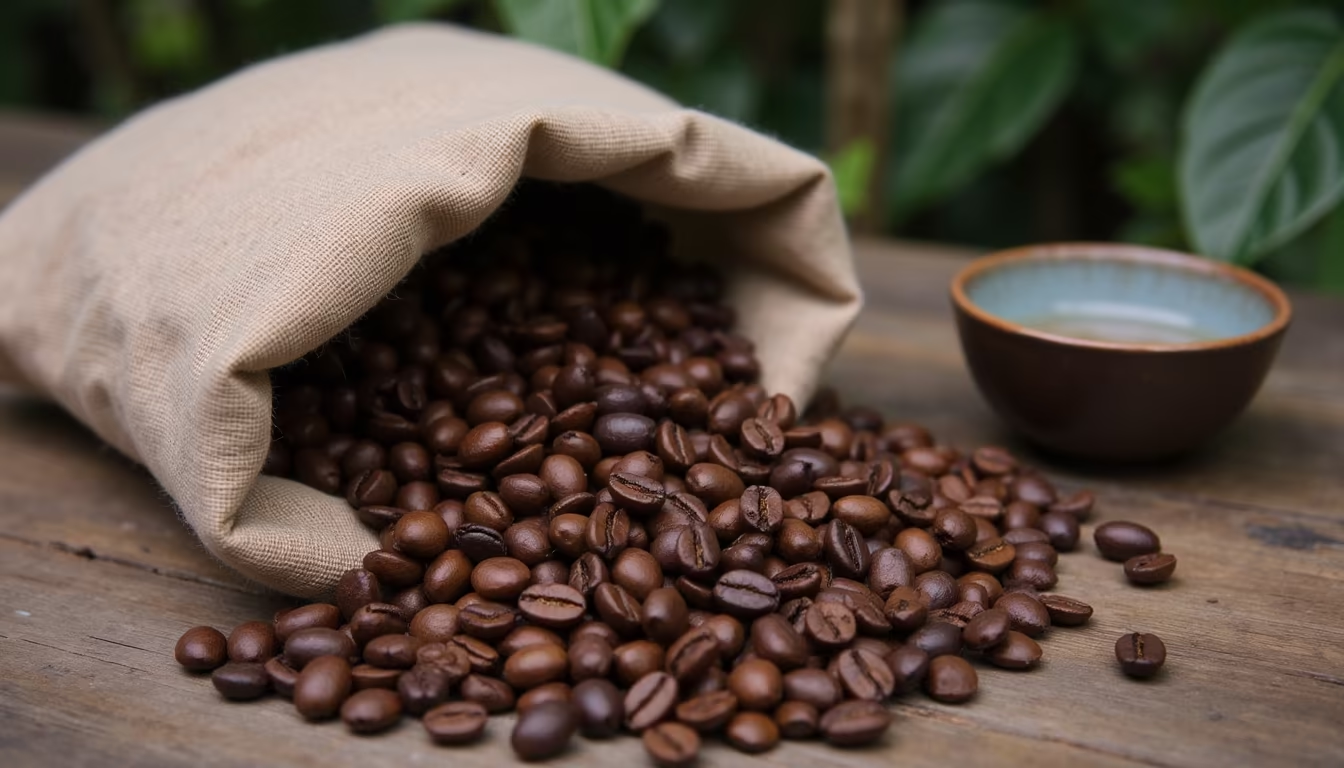
The phrase "single-origin" gets thrown around loosely, so here is how we read it in Pai. A good local bag will name the village or grower, the process, and a rough harvest window. The flavours skew toward what high-grown Thai arabica does well: gentle acidity, notes of cocoa, brown sugar and stone fruit, and a soft body rather than a harsh roast.
Micro-roaster studios worth seeking out
You will also meet a lot of "pai coffee studio" style micro-roasters, small rooms where the same person roasts, brews and serves. In practice, those are the spots where you can taste before you commit, ask for a lighter or darker roast, and actually learn something about the bean. We tell guests to order a filter or pour-over first to judge the bean honestly, then a milk drink for comfort.
| Roast style | Tastes like | Best brewed as |
|---|---|---|
| Light, washed local | Bright, floral, stone fruit, clean finish | Pour-over or filter, black |
| Medium, honey process | Brown sugar, soft acidity, rounded | Flat white or as filter |
| Medium-dark, natural | Cocoa, ripe fruit, fuller body | Espresso, latte, milk drinks |
If a cafe cannot tell you anything about the bag, treat it as a view cafe, not a coffee cafe, and order accordingly. Both have their place on a slow Pai morning.
Scenic cafes with rice-field and hillside views
Where the view cafes cluster
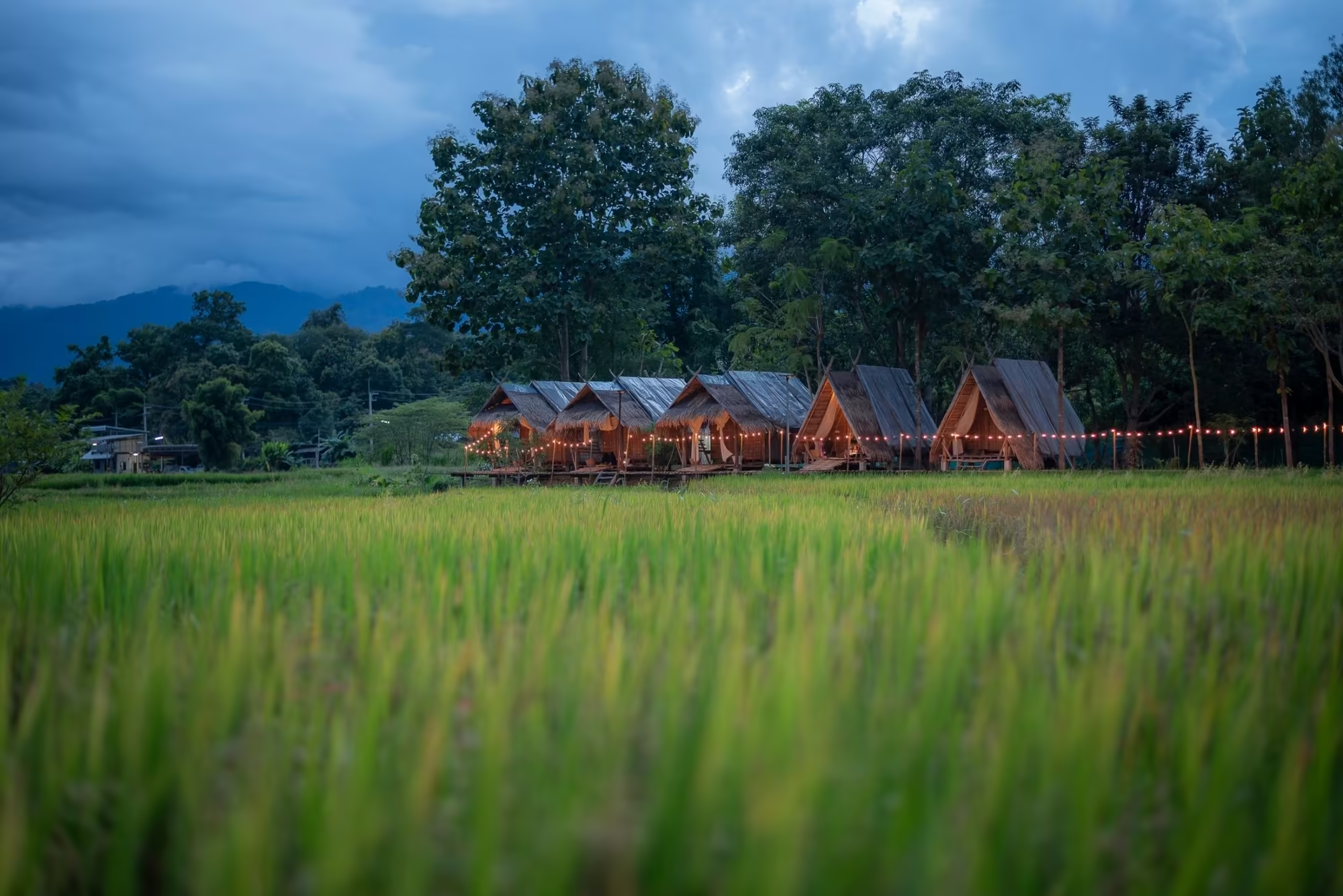
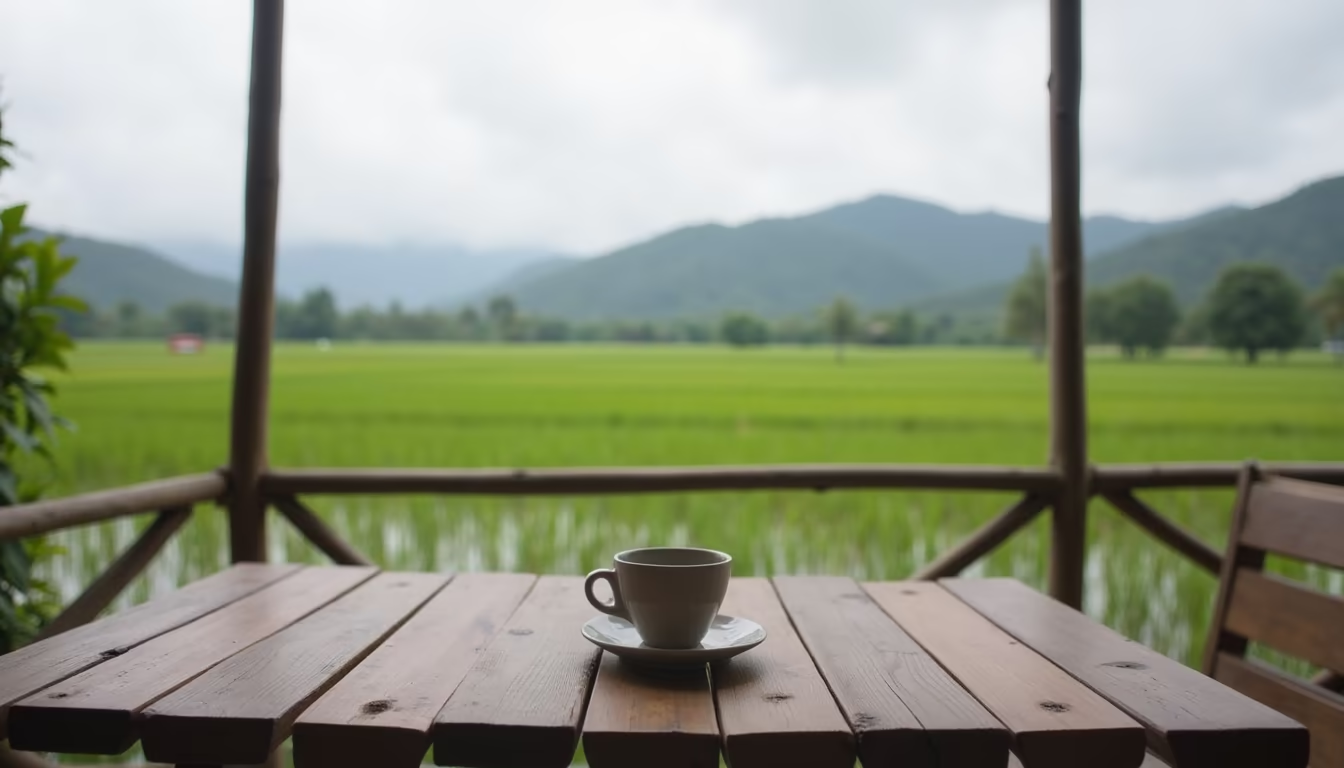
This is where Pai earns its reputation. Many of the best cafes sit a few kilometres out of the centre, perched over rice fields or tucked into the lower hills, so a coffee run doubles as a short scenic ride. The sweet spot is the band of countryside roughly 2 to 6 km from the night market, close enough to reach in 10 to 15 minutes on a scooter, far enough to feel like open valley.
The best time of day to go
Morning is the move. The light is soft, the air is cool, and the terraces are quiet before the day-trippers arrive. In the green season the paddies are vivid; in the cool season they turn gold before harvest. Either way, a window seat or an outdoor table over the fields is the whole experience, and it costs no more than a city cafe back home.
If you are still mapping out your days, our overview of things to do in Pai shows how a slow cafe morning slots neatly between a waterfall and a sunset viewpoint without feeling rushed.
Flat-white quality and where to buy beans to take home

How good is the flat white, honestly?
Honest take: the flat-white quality in Pai is better than you would guess for a small mountain town, and it has crept up over the last few years as more baristas trained in Chiang Mai have moved back. A well-pulled flat white here is creamy, balanced and not over-roasted, especially when it is built on a local medium roast. You will still find the odd burnt, bitter cup at a pure view spot, which is why we steer guests toward the roaster-led cafes for milk drinks.
Buying beans to bring home
Taking beans home is one of the nicest souvenirs you can carry out of the valley, and it travels far better than a fragile trinket. Most roaster cafes sell retail bags, usually 200 to 250 grams, and many will grind to order or vacuum-seal for the flight. We suggest buying on your last morning so the bag is as fresh as possible.
- Buy whole bean if you have a grinder, and ask for the roast date.
- Ask for the process on the label, washed, honey or natural, so you can repeat what you liked.
- Grab two small bags over one big one, so you can compare villages back home.
From cases we see often, couples who buy a bag together end up recreating the trip every weekend back home, which is a quiet kind of win for a few hundred baht.
Couples-friendly mornings: how we plan a slow coffee day

A good Pai coffee morning is less about ticking off cafes and more about pacing. We usually suggest starting early at a quiet rice-field spot for the first, best cup, then drifting to a roaster a little later to taste a flight and buy beans. That leaves the warm middle of the day free for a swim or a nap.
A simple two-stop morning
- First light: a scenic field cafe for a flat white and a slow start.
- Mid-morning: a roaster studio for a pour-over flight and beans to take home.
- Late morning: back to your stay before the heat, ready for an easy afternoon.
In practice, the couples who love their Pai mornings most are the ones who do not over-schedule them. Two great cups beats five rushed ones. If you are arriving fresh and want the smoothest route into the valley, our guide on how to get to Pai covers the minivan from Chiang Mai and the famous 762 curves so you start your first morning relaxed.
How the Pai coffee scene compares to Chiang Mai
Volume versus proximity
Travellers often arrive in Pai straight from Chiang Mai and expect the cafe culture to be a smaller copy. It is not, and the difference is worth knowing before you set your mornings. Chiang Mai has the volume, the third-wave fit-outs and the long opening hours; Pai trades all of that for proximity to the farms and a slower pace at the table.
What that means for your cup
That trade plays out in the cup. In Chiang Mai you choose from dozens of roasters and origins from across the region; in Pai you drink fewer beans, but more of them are grown within an hour or two of where you are sitting. From what we see with guests, people who love big-city cafe-hopping should keep that habit for Chiang Mai, then treat Pai as the place to drink local and slow right down.
If you only have a short window in the valley, our overview of things to do in Pai helps you weave one good coffee morning around the rest of the loop without missing the highlights.
Pai coffee mornings FAQ
Two quick questions we hear most often before guests head out for their first cup.
Do I need a scooter to reach the good cafes? Not strictly, but it helps. The most scenic rice-field and hillside spots sit a few kilometres out, so a scooter or a short songthaew ride opens up the best mornings. A handful of solid cafes sit in walking distance of the night market too.
Is Pai coffee expensive? No. A flat white or filter is comparable to a city cafe and often cheaper, and a retail bag of single-origin beans is a fair-value souvenir. You are paying small-town prices for genuinely local, high-grown arabica.
Related Pai mornings worth pairing with your coffee
Coffee slots beautifully beside the gentler half of the Pai loop. A field cafe before a swim, or a roaster stop on the way back from a viewpoint, turns a single cup into a whole easy day. A short ride to Pai Canyon for sunset pairs perfectly with a morning spent over beans, and the two bookend a day without rushing it.
For couples who want the cafe-and-quiet side of Pai, a calm, design-led stay makes the whole rhythm easier. If you want the full picture of areas and trade-offs first, read our honest rundown of where to stay in Pai, then we can match you to the room that fits how you like to slow down.
Pai coffee will not shout for your attention the way a canyon sunset does, and that is the charm. It is the slow, repeatable pleasure of the trip, a good cup in cool air over green fields. Plan two unhurried mornings, buy a bag to take home, and let us handle the bed so the only decision left is washed or natural.