By BestHotelPai Team · Updated June 12, 2026
In short Pai Canyon, or Kong Lan, is a no-charge cluster of eroded sandstone ridges lying about 8 km southeast of the town centre, prized for golden-hour panoramas and slim red-earth paths. Aim to arrive sixty minutes ahead of sundown, choose gripping footwear, carry water plus a torch, and keep well off the flaking rims. The opening deck is a five-minute stroll; venturing along the deeper spurs runs 30 to 60 minutes.
Picture a web of rust-coloured ridges, thin as a balance beam, glowing under a dropping sun while a whole valley spreads out beneath your boots. That is Pai Canyon, and it tends to top the wish list for anyone heading into these hills. The catch? Plenty of people show up at the wrong hour, in the wrong shoes, with no clue how exposed those ridge-tops really get.
So this guide tackles the practical questions head-on: pinpointing the spot, choosing your hour, reading the trails as your feet meet them, packing the right bits, and keeping steady on those flaking sandstone fins. We host travellers minutes down the road, we steer them up here week after week, and we collect every story of what jolted them when they trundled back at twilight.
Where is Pai Canyon, and what makes canyon Pai Thailand special?
Location and getting there
Pai Canyon, known locally as Kong Lan, sits roughly 8 km southeast of Pai town on Route 1095 toward Chiang Mai. From the central walking street it is a 15 to 20 minute scooter ride. There is a small free car park, a few drink stalls, and a stone staircase that leads straight up to the first viewpoint. No ticket, no gate, no fee.
The terrain that makes it unique
What makes canyon Pai Thailand different from a typical lookout is the terrain itself. Generations of monsoon runoff have gnawed the soft ferrous sandstone into a labyrinth of knife-thin spurs, several barely broader than two boots side by side, plunging some thirty metres apiece into tangled pine and bracken. You are not peering at a gorge from behind a guardrail. You are perched on its very crest. Therein lies both the exhilaration and the hazard, bundled together.
Geologically, the formation is a textbook badlands: poorly cemented sediment that erodes into pinnacles, gullies, and fluted walls whenever rainwater funnels through it. The reddish tint comes from iron oxide staining the grains, the same mineral that paints so much of the surrounding highland soil. Each wet season nibbles the fins a fraction thinner, which is precisely why a ledge that felt solid last year can shed a crumbly lip underfoot today.
The surrounding terrain belongs to the Huai Nam Dang uplands, all pine spurs and dawn fog. For the official backdrop on this corner of the country and its travel seasons, the Tourism Authority of Thailand notes that the cool, dry stretch from roughly November through February brings the clearest highland skies, a window that lines up with the conditions our team tracks each year.
When is the best time to visit for sunset?
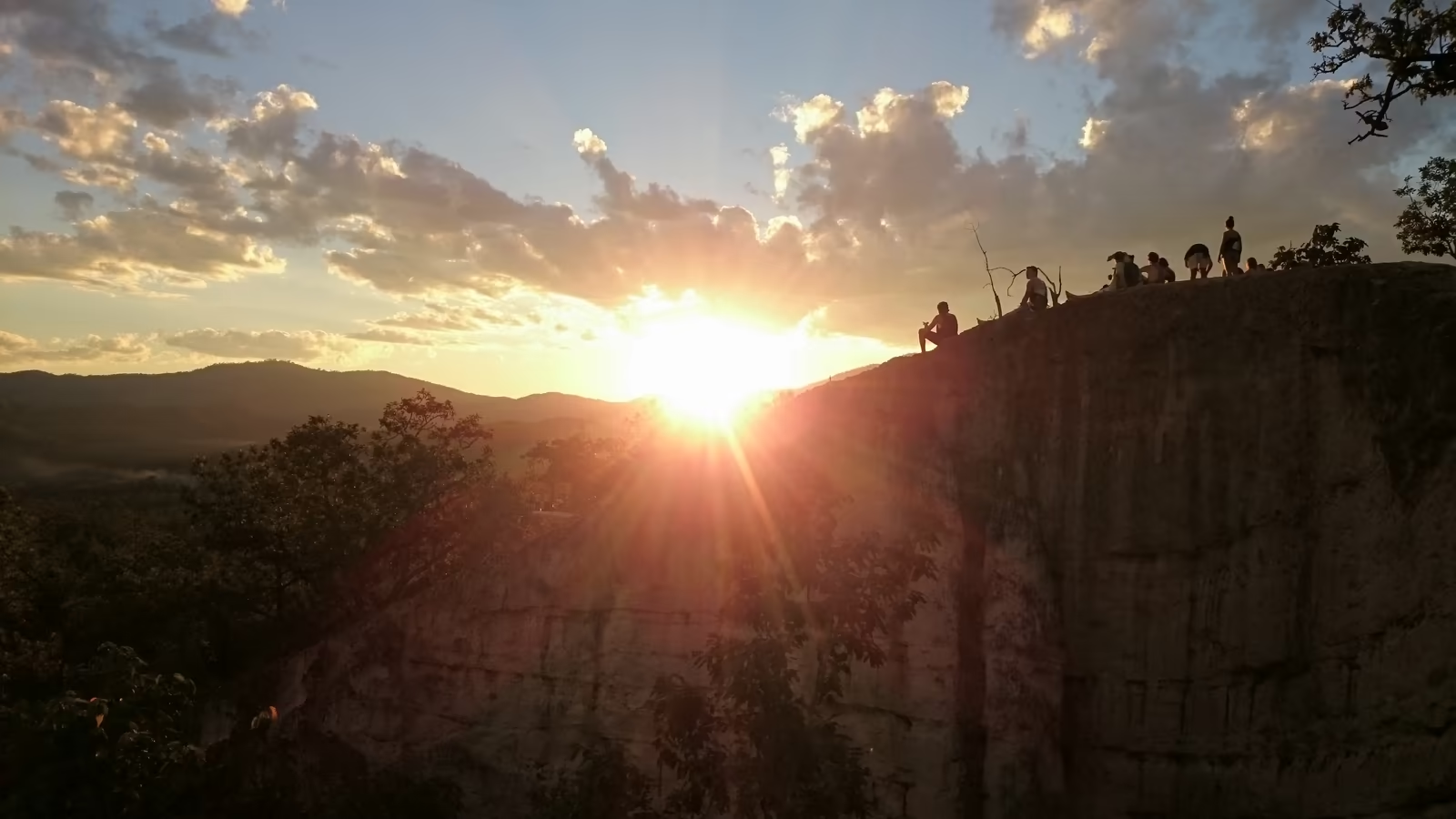
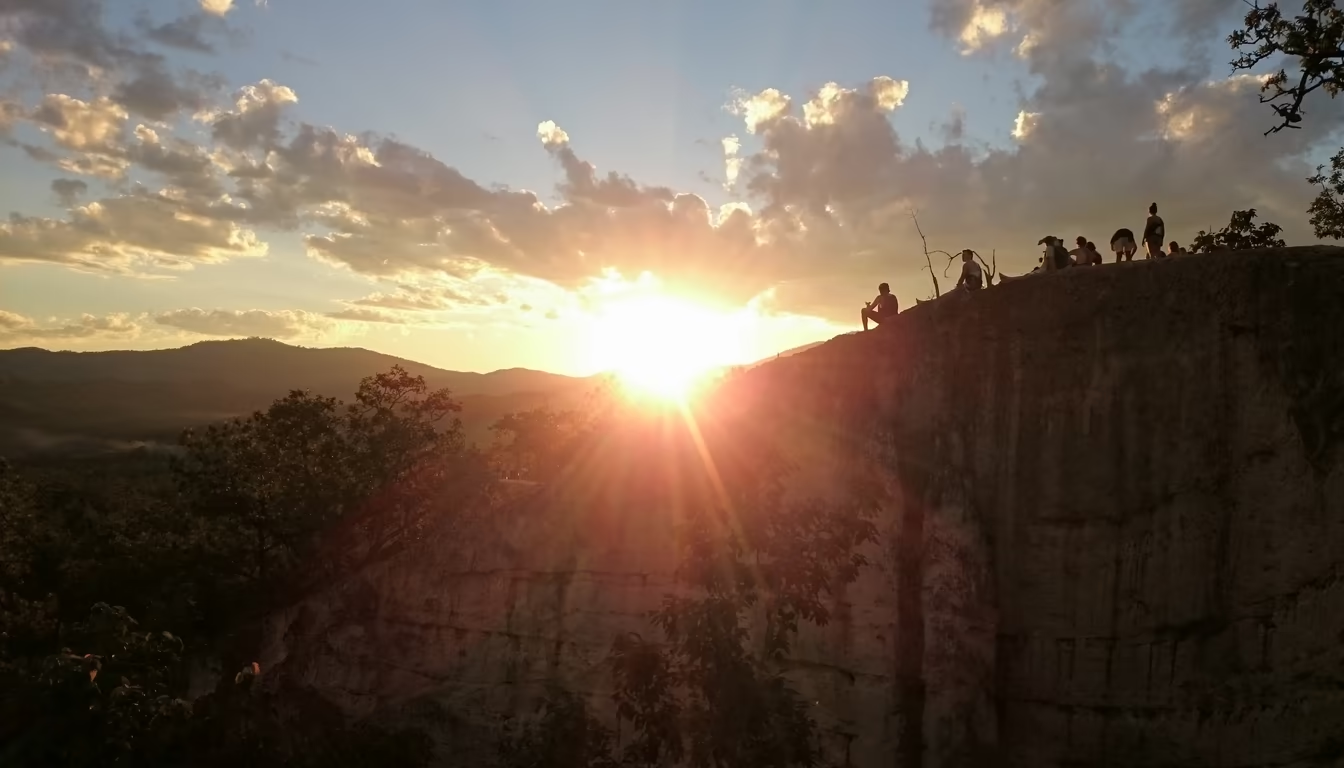
Sunset is the reason most people come, and it earns it. The sun drops behind the western ridges and lights the red clay gold while mist gathers in the valley. Arrive about an hour before sunset so you have light to explore the ridges, then settle on a wide ledge for the show. In our experience hosting visitors here, the ledges nearest the first lookout claim up 30 to 45 minutes ahead of sundown during peak months, so roll in early if you want a clear patch to perch on.
Season matters more than people expect. Here is how the months actually play out on the ground:
| Season | Months | Trail condition | Our take |
|---|---|---|---|
| Cool dry (high) | Nov to Feb | Firm, grippy clay | Best conditions, busiest sunsets |
| Hot | Mar to May | Dusty, dry, hazy from burning | Go late afternoon, skip midday heat |
| Green wet | Jun to Oct | Slick, slippery clay | Lush views, highest fall risk |
The hot season brings smoke haze from agricultural burning, which can soften sunset colours and reduce visibility, so March and April sunsets are hit or miss. The green season is gorgeous but the clay turns to soap when wet, and that is when most slips happen.
What are the canyon Pai ridge trails really like?
The view from the top
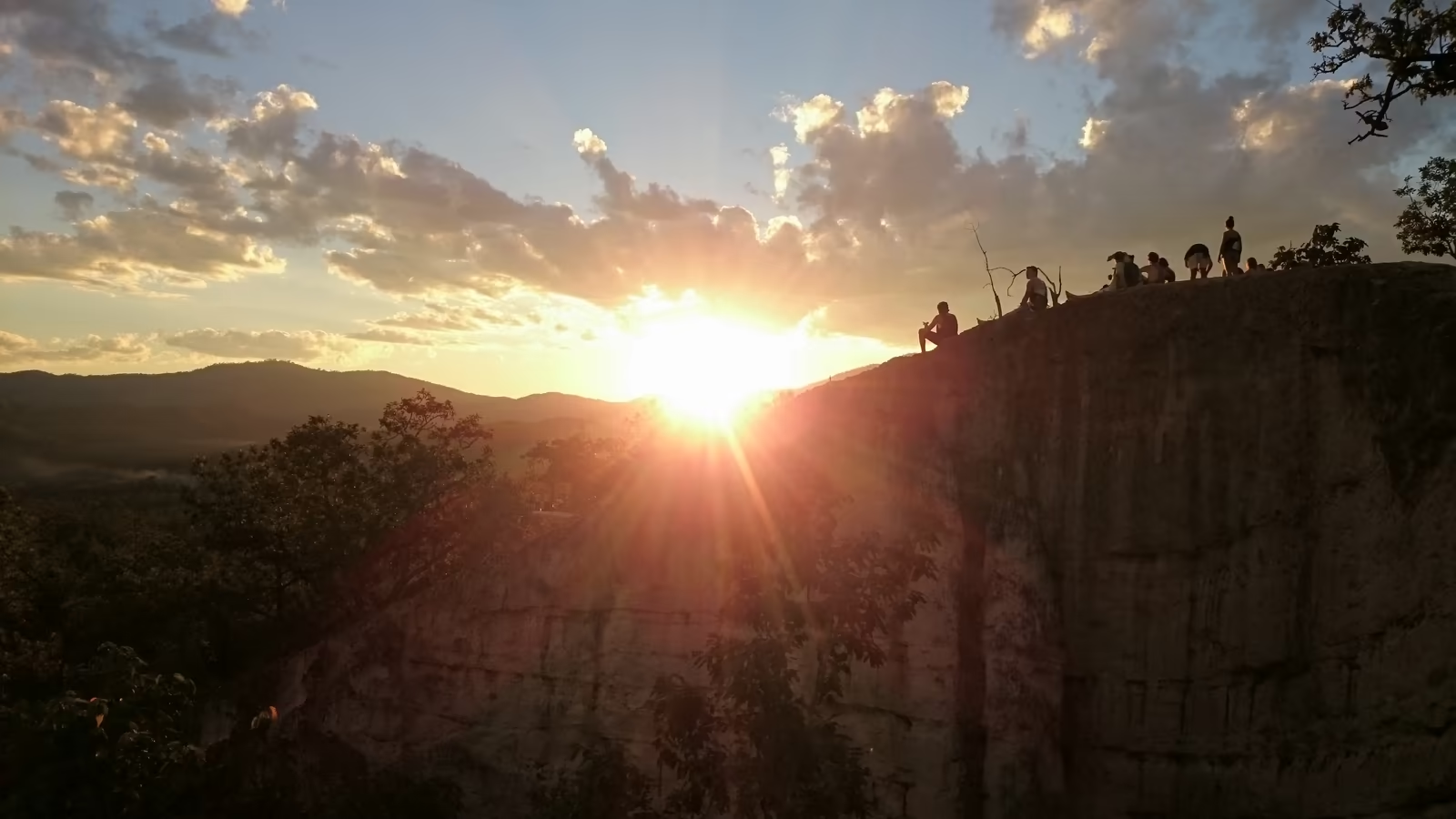
Crest the staircase and the payoff lands immediately: a panorama of corrugated red spurs fanning outward, dotted with stubborn pines, the Pai valley quilted in paddy green far below, and distant blue ranges stacking toward the Myanmar border. Hawks ride the thermals overhead, and on a clear evening the whole bowl glows amber. That first railed platform alone justifies the ride.
The opening viewpoint is a gentle 5 minute climb up the staircase, level and family friendly, fronted by a broad deck and a sturdy rail. Most arrivals snap a photo here and retreat. That stretch suits absolutely everyone.
Beyond the railing: the harder trails
Beyond the railing, the real Pai Canyon begins. The ridges branch into a maze of trails with no signs and no fences. Some sections are wide and easy. Others narrow to a single sandy spine with steep drops on both sides, and a few short scrambles need you to use your hands and lower yourself down clay steps that other hikers have worn smooth.
- Easy loop: stay near the first viewpoint, 10 to 15 minutes, no exposure.
- Medium ridge walk: follow the main spine out and back, 30 to 40 minutes, a few narrow sections.
- Full explore: drop into the lower trails and loop around, 45 to 60 minutes, real scrambling and exposure.
The further out you push, the fainter the track and the bigger the commitment of each step. Backing off at a spot that unsettles you is simply smart, not embarrassing. The tip we hand newcomers: treat the very first pinched ledge as your gut-check, and if it spooks you, that is precisely where to turn around.
How it compares to other viewpoints
How does the gorge stack up against the area's other free outlooks? A quick comparison helps you decide whether to prioritise it or pair it with a sunrise spot:
| Outlook | Signature view | Effort | Best light |
|---|---|---|---|
| Kong Lan ridges | Eroded red fins, valley sprawl | Easy to strenuous | Sunset |
| Yun Lai viewpoint | Sea of fog over the Chinese hamlet | Drive plus short stroll | Sunrise |
| Roadside hill cafes | Tea-terrace panorama, no walking | None, ride right up | Late afternoon |
Honest verdict from repeat evening visits: the eroded ridges win on raw drama and zero cost, while Yun Lai edges ahead for a misty dawn. Stitch them into opposite ends of one day and you bank both moods without doubling back.
How do you stay safe on the Pai Canyon ridges?
The drops are unforgiving and the surface is soft. The biggest risks are simple: loose sandy footing, eroded edges that crumble under weight, and slippery clay after rain or heavy dew. Northern Thailand's mountain parks ask visitors to stay on marked paths and respect terrain warnings; that guidance, echoed by the Tourism Authority of Thailand, is exactly why we steer nervous walkers to the railed viewpoint and no further.
Our short safety checklist for anyone heading up at dusk:
- Lace on footwear that grips. Flimsy sandals are behind most of the tumbles up here.
- Pack a headlamp or charged phone torch. The return after sundown happens in dimming light over bumpy ground.
- Bring water. Shade comes only in scraps, and the haul back uphill heats you fast.
- Hold well clear of the lips, doubly so after rain, and never dangle your legs off a flaking edge for a photo.
- Mind the little ones every second. The railed lookout is fine; the open fins are no spot for kids left to wander.
A quick kit list before you set off
Pack light but pack smart. The essentials that keep an evening scramble pleasant rather than punishing:
- Closed trail shoes or trainers with a chunky sole, never loose slides.
- A compact torch or headlamp with a fresh battery for the dim walk down.
- At least one litre of drinking water per person, more in the hot months.
- A thin windbreaker; the breeze along the exposed spurs sharpens once the sun dips.
- Sunscreen, a brimmed cap, and insect repellent for the scrubby fringes.
- A small daypack so both hands stay free for the rockier downhill steps.
This is broad guidance shaped by the local terrain, not formal safety advice; confirm the day's trail and weather conditions yourself and retreat if anything feels off. No wardens patrol these eroded spurs, so every footfall is on you.
Where should you stay near Pai Canyon?
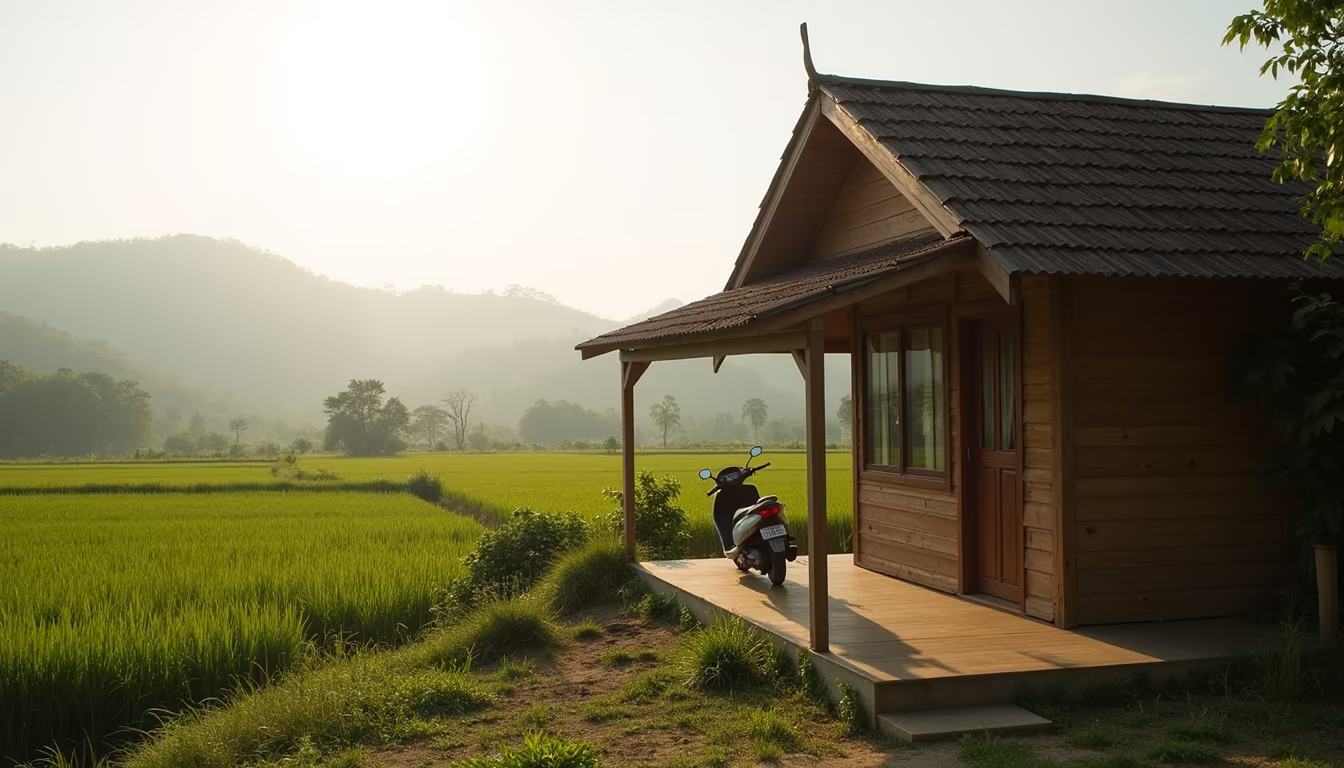
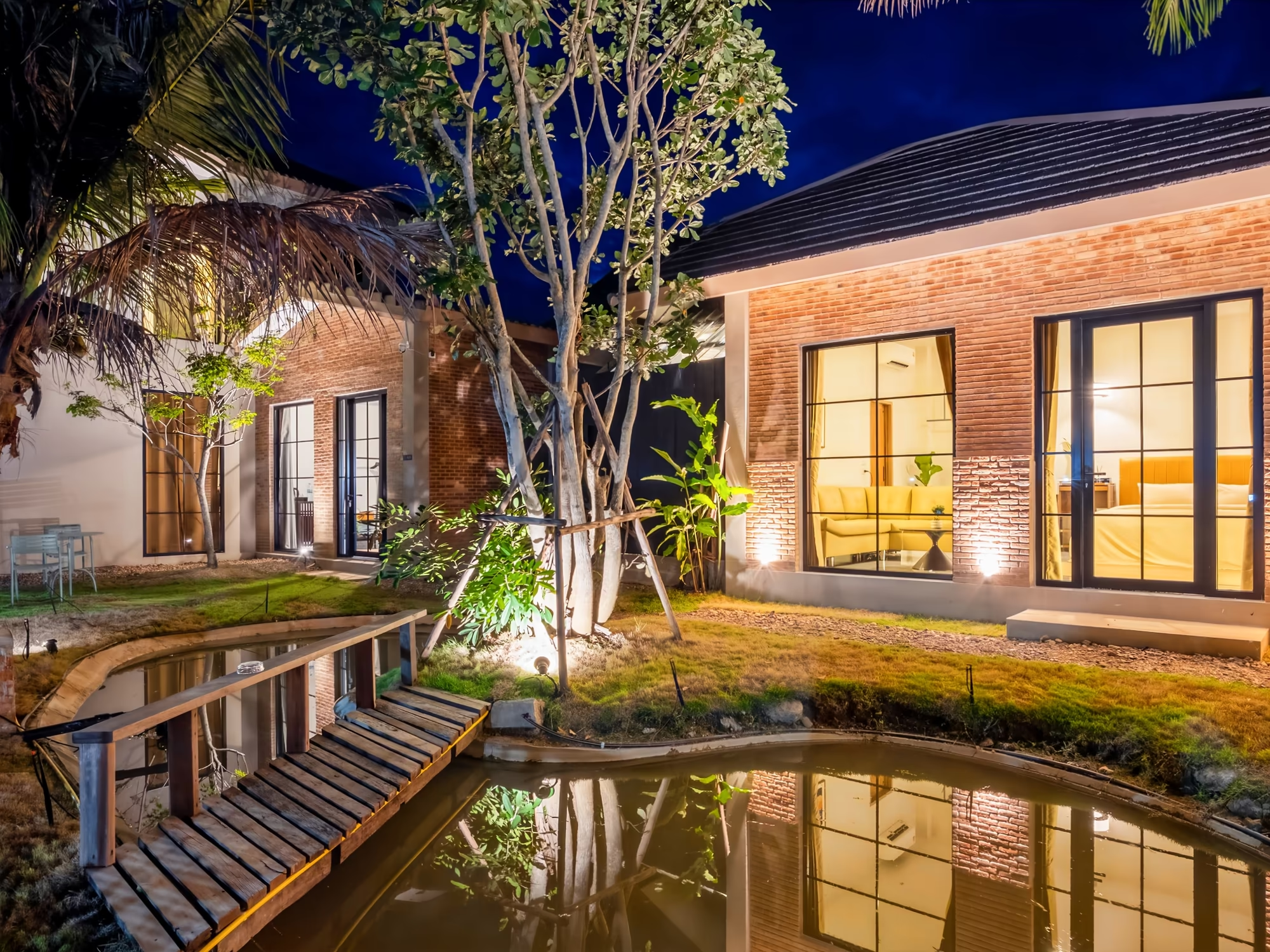
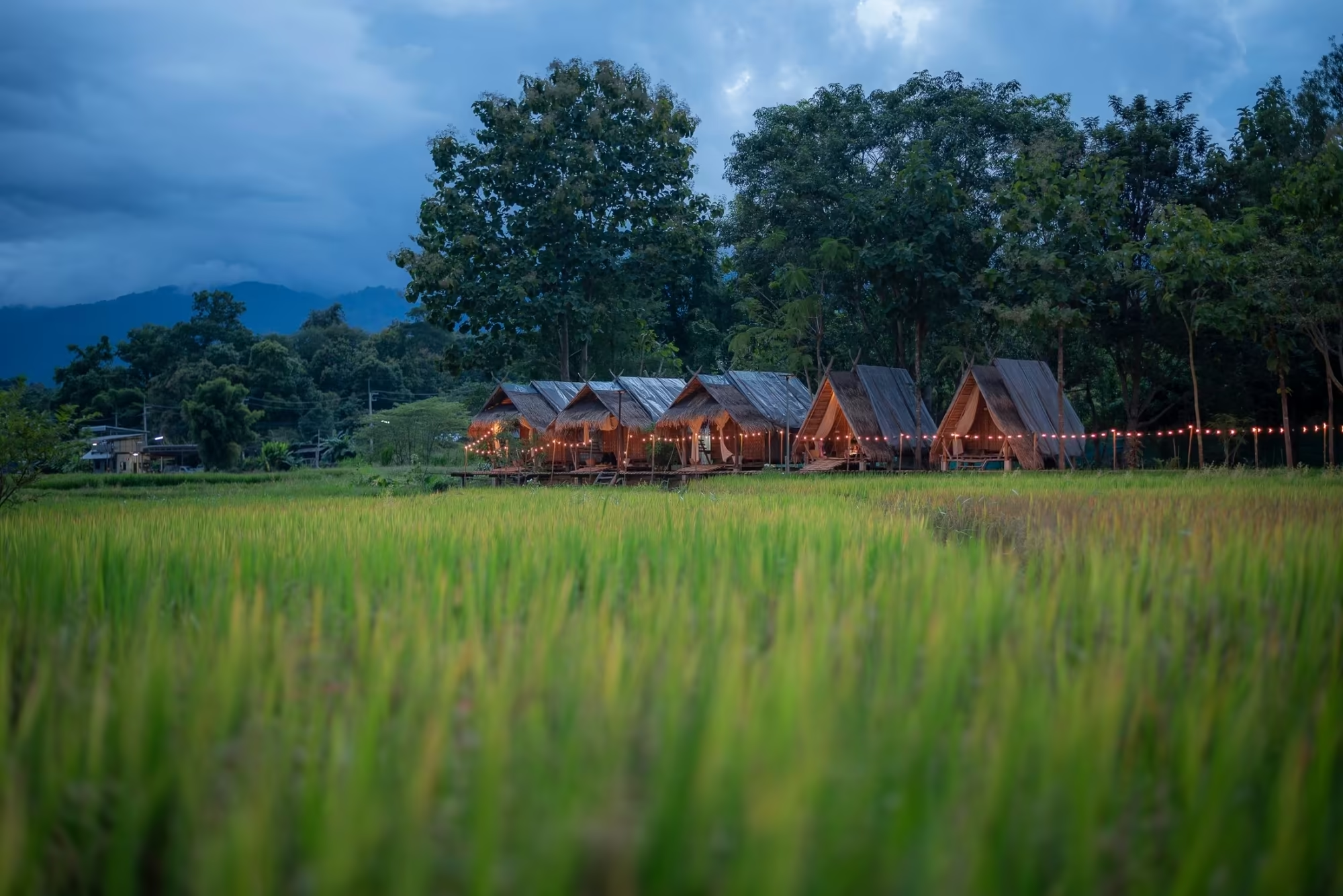
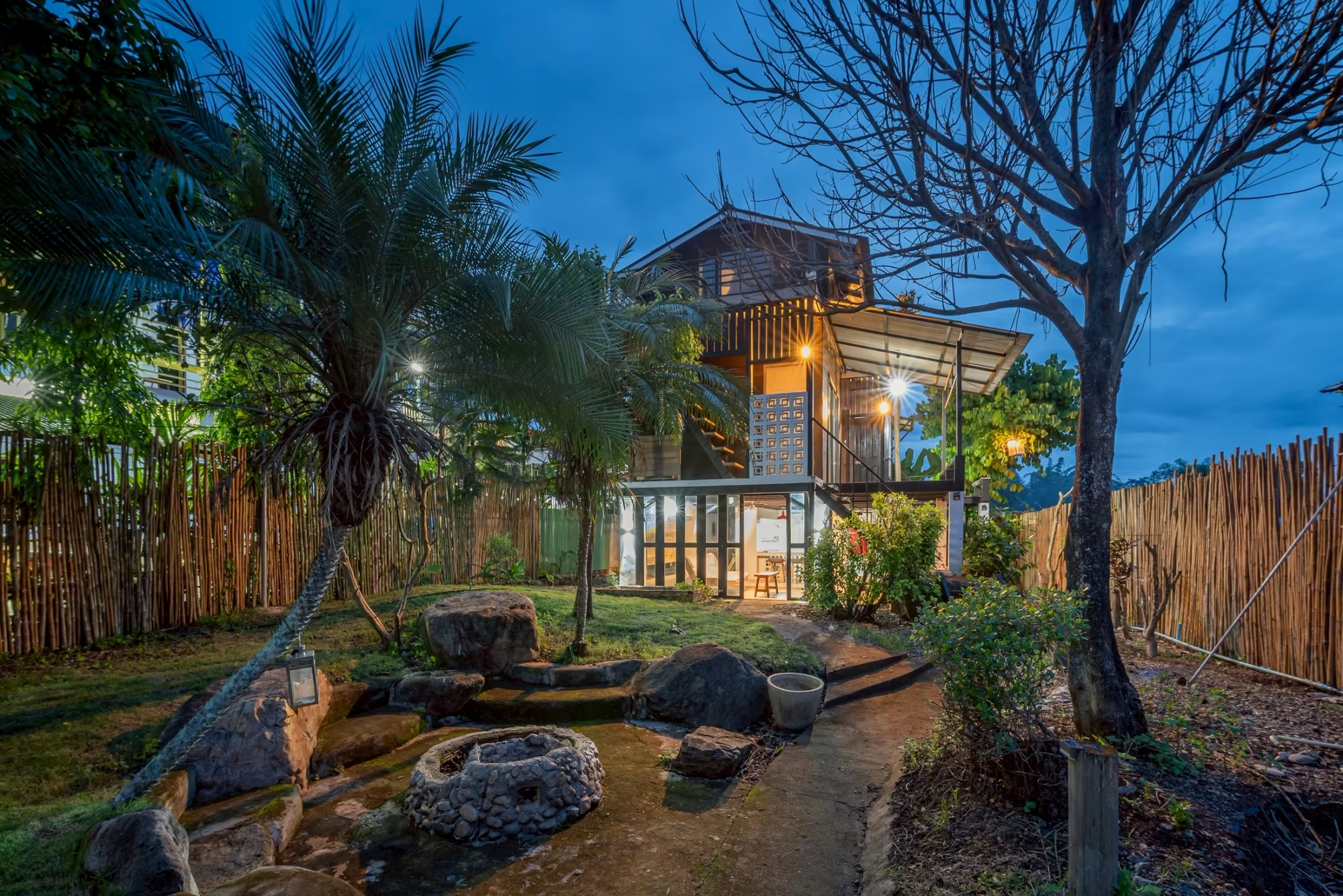
There is no lodging at the ridge itself, and you would not want any: this is a golden-hour pit stop, not somewhere to bed down. Far better to sleep in or just beyond the little town, which leaves the eroded gorge, the riverside pools, the cascades, and the after-dark food lanes each a brief ride from your door. A hired motorbike, roughly 150 to 200 baht daily, reaches the trailhead in 15 to 20 minutes; non-riders can grab a shared songthaew or a quick cab for the evening dash. Betel Palm Village, tucked under the palms a few minutes from town, is a quiet, fast-Wi-Fi base that keeps you close enough to catch the canyon at that early golden-hour window.
To choose your base, lean on our area-by-area where to stay in Pai guide, which sorts the rooms by vibe, budget, and how far each one sits from the canyon side of the valley. Arriving from afar and still mapping the journey? Our how to get to Pai walkthrough lays out the bus, the minivan, and the legendary mountain bends so nothing catches you off guard. Sunset chasers usually do best in a calm, view-leaning room toward the southeastern edge, a quick hop from those ridge-top skies.
Why book your canyon stay direct with BestHotelPai
First, the blunt fit check. These eroded ridges reward active explorers, couples after a no-cost golden hour, keen photographers, and anyone steady on rough footing. They underwhelm toddlers left to roam, travellers wobbly on their feet, and people chasing only the snapshot without the scramble: for that crowd, the fenced first lookout already delivers the goods.
Reserve through us and your message lands with locals who hike these fins themselves, never a distant hotline. Owning every room means we can steer you toward the one nearest your must-see list, skip the aggregator surcharge, and keep your nightly rate gentler than the giant portals, all with relaxed terms if dates wobble. The payoff is the local intel woven in: ping us about smoke-season haze, the steadiest path after a downpour, or the best post-sundown noodle stall, and the reply comes from someone who scrambled up there days ago.
This place pays back travellers who turn up ready and treat the soft sandstone with respect. Aim for the hour before the sun drops, lace on footwear that bites, fix your turnaround point in advance, and the finest panorama in the valley costs you exactly nothing. The moment you want a room within easy reach of it, one quick message sorts the rest.
Hero photo: Sgroey / Wikimedia Commons (CC BY-SA 4.0)